

Feeling unsure about your next step? You’re not alone. Many feel stuck, not from a lack of ambition but from not knowing what truly matters. Think of values as your internal compass. Without them, life can feel like driving without a map—random and aimless. By defining what’s important, you gain clarity and purpose. This guide will help you uncover your core values, creating a life that feels more grounded and meaningful.
What are Personal Core Values?
Core values act as your compass, shaping your decisions and actions. Have you ever paused to define your personal values? Unlike fleeting goals, they ground you in who you are. Think honesty over meeting a deadline. Personal value examples, like integrity or compassion, spark self-awareness, a key step toward self-improvement. Life’s messy, imperfect. But when values guide you, they steady you, even when things feel uncertain—whether you’re navigating personal challenges or working with margin improvement consultants to create better results in your business. So, what values matter most to you?

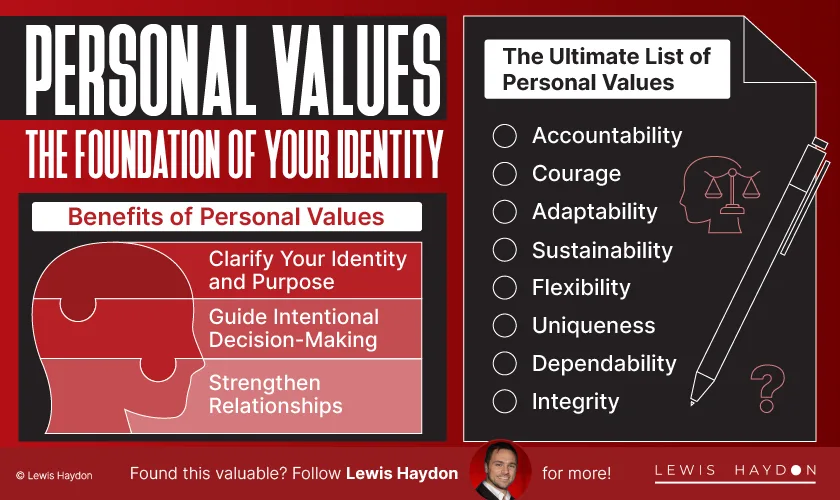
Benefits of Personal Values
Clarify Your Identity and Purpose
What really matters to you? Personal values shape how you navigate life. They’re like a compass—helpful, even if you don’t always follow it perfectly. Struggling to choose between career and family time? That’s your values at play. Identifying them makes decisions clearer, helps you set goals that are more meaningful, and life more authentic. It’s not about perfection—it’s about progress.
Guide Intentional Decision-Making
Ever feel stuck chasing goals that don’t feel right? When your choices align with your values, things just click. Think of it like wearing shoes that fit—you move forward naturally. Sure, life’s messy, but staying true to yourself makes it easier to navigate challenges. Why force it when you can walk your own path?
Strengthen Relationships
What matters most to you? Knowing your core values and beliefs is like having a personal compass. It’s not about being perfect—it’s about understanding what feels right. Think of it this way: Would you lend your favourite book to someone who won’t care for it? Values help you set boundaries, nurture genuine connections, and protect your peace.
The Ultimate List of Personal Values
So, what are your core values? Take inspiration from a personal values list as you brainstorm ideas. Write them down and determine which of those resonate with you.
Here’s a list of values to give you some ideas and help you find what resonates with you:
Accountability
Accountability means owning your actions, even when it’s hard. Missed a deadline? Forgot a promise? We’ve all been there. It’s not about being perfect—it’s about learning from those moments. Think of it as fixing a flat tire: It is inconvenient but necessary to keep moving forward. What could you achieve if you faced mistakes head-on instead of avoiding them?
Courage
Courage isn’t about fearlessness—it’s about action despite fear. Ever hesitated before speaking up in a meeting or trying something new? That’s courage right there. It’s messy, imperfect, and deeply personal. Like learning to ride a bike, the falls are part of the process. What’s your “bike” moment today? Small wins count, too.
Adaptability
Adaptability means tackling change with an open mind. Missed the bus? Pivot to a ride-share app. Plans fell through? Find a new way forward. It’s not about perfection—who has that, anyway? It’s about adjusting, learning, and staying resilient. Each curveball makes you stronger, even if it doesn’t feel like it at first.
Sustainability
Sustainability is about more than recycling or using a reusable mug—though those help. It’s asking: how do my choices today impact tomorrow? Think of it like borrowing a friend’s car. Would you return it scratched and empty? Probably not. Small, mindful actions can ripple out, shaping a planet we’re proud to pass on.
Flexibility
Flexibility is about adapting when life throws a curveball. A new job? A last-minute change? It’s staying open, even when it’s not easy. Think of it like navigating traffic—do you stick to your route or take that unexpected detour? Sometimes, the detour works better. Embracing change, even imperfectly, is what keeps us moving forward.
Uniqueness
What makes you unique? Is it your quirks, your style, or even those little imperfections you try to hide? Uniqueness is about owning it all—flaws included. Like how a favourite mug might have a chip but still feels perfect. It’s not about fitting in; it’s about standing out—for all the right reasons.
Dependability
Dependability is about trust and consistency. But let’s be real—how often do we truly deliver on every promise? Think of a friend who always shows up on time or a coworker who follows through—it matters, right? Now flip it. How dependable are you? It’s not about perfection but building trust, one small act at a time.
Integrity
Integrity is about doing what’s right—even when no one’s watching. But who hasn’t faced moments of doubt? Think of it like returning extra change at a store or owning up to a mistake at work. It’s not about being perfect; it’s about trying. Over time, these choices build trust, respect, and a solid foundation for your personal and professional life.
The Role of Personal Values In Shaping Your Identity
What really drives your decisions every day? Personal values. They’re like an internal compass, shaping how you navigate life. Ever wonder why some choices feel right while others don’t? When your actions align with your core values, life feels more authentic—like wearing your favourite, perfectly worn-in shoes. And the best part? Values don’t just guide you; they help you find your people—those who truly get you.
How Do Your Personal Values Affect the Work You Do?
Your values don’t just guide your personal life—they shape your career, too. Think about it: if loyalty is your strength, doesn’t that make you the teammate others rely on? Maybe honesty drives you. It could mean you’re open to feedback and trusted at work, like the glue holding a project together. And what about perseverance? It’s the grit that pushes you through tough deadlines. Your imperfections are part of the package—they define your professional identity.
FAQs
How many personal values should you have?
How many personal values should you have? Thereu2019s no perfect numberu2014itu2019s personal. But narrowing it down to 3-5 core values can help. Think of them like a compass, guiding your decisionsu2014just like GPS does on road trips.
What influences personal values?
Our values are shaped by everything around usu2014family, culture, lifeu2019s ups and downs. Think about it: how much of what you believe came from childhood? A parentu2019s advice, or even a tough moment, can stick with you for years. Over time, wins and failures reshape what matters most. Self-reflection? Thatu2019s how we figure out our true priorities.
Can personal values change over time?
Our values arenu2019t set in stoneu2014they shift, evolve, adapt. Have you ever pursued career success, only to later crave work-life balance? Life milestones, like starting a family or switching jobs, can make us rethink everything. Itu2019s like reorganizing a closet: what once fit perfectly might no longer work. And thatu2019s okay. Change is what helps us with professional and personal growth.
How can you identify your core values?
What really matters to you? How do your choices affect others? Inner worku2014like journaling or meditationu2014can offer clarity, much like cleaning a cluttered room, which helps you find lost items. Not into that? Try a values assessment or chat with a coach. Itu2019s not about perfection, just progress. Small steps lead to big insights in your journey.




