In sales, where competition is tough, every company seeks outstanding professionals. These individuals have specific skills and form a strong team that increases business revenue.
What are these essential sales skills, and how can they be improved? Read on to find out!
What are Sales Skills?
Sales skills help you sell products or services effectively. These include interpersonal skills like communication. Good communication lets you explain benefits and services attractively, drawing in customers, building relationships, and negotiating deals. Technical skills, like knowing your products or services, are also important. Improving both hard and soft skills can grow your sales and advance your career.

Types of Sales Skills
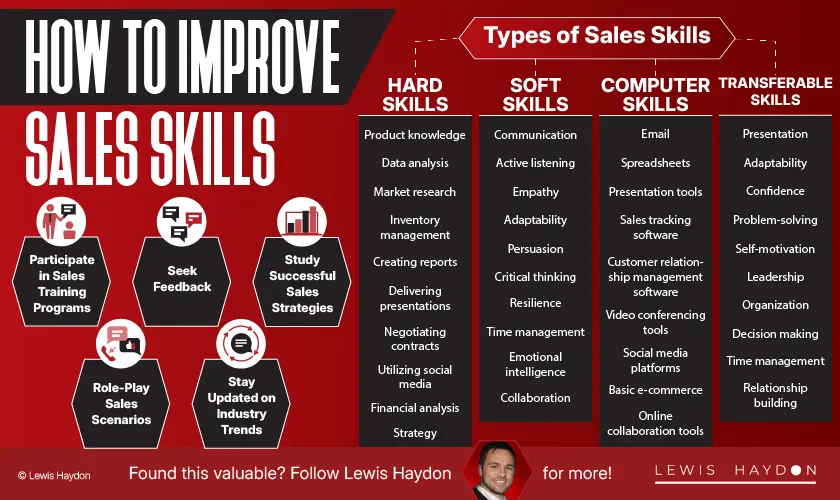
In this section, we will explore various types of sales skills. Understanding these skills can help you become a more effective sales professional.
Hard Skills
- Product knowledge: Understanding the details and features of a product is crucial. It helps effectively communicate benefits to customers.
- Data analysis: Analyzing data helps in making informed decisions. It involves examining data sets to identify patterns and trends.
- Market research: Gathering information about consumer needs is important. Market research helps understand the competition and market demands.
- Inventory management: Keeping track of stock levels is essential. It ensures that products are available when needed and prevents overstocking.
- Creating sales reports: Sales reports provide insights into the effectiveness of the sales process. They help identify areas for improvement and track progress.
- Delivering presentations: Sales presentations communicate ideas and information clearly. They involve speaking to an audience to convey a specific message.
- Negotiating contracts: Good negotiation skills help you reach favorable agreements. It requires clear communication and an understanding of terms.
- Utilizing social media: Social media is a tool for connecting with audiences. It helps promote products, engage with customers, and improve social selling.
- Financial analysis: Financial analysis involves evaluating financial data. It aids in assessing a company’s financial health and performance.
- Strategy: Strategy involves planning to achieve specific goals. It requires setting objectives and determining the best approach to reach them.
Soft Skills
- Communication: Communication is the process of sharing information effectively. It involves both speaking and listening to convey messages clearly.
- Active listening: Active listening means fully concentrating on what is being said. This helps in understanding the message and responding appropriately.
- Empathy: Empathy is the ability to understand and share the feelings of others. It helps in building stronger relationships and trust.
- Adaptability: Adaptability is the ability to adjust to new conditions quickly. It is essential in a fast-changing world to succeed.
- Persuasion: Persuasion is the skill of convincing others to accept your point of view. It relies on logical arguments and emotional appeal.
- Critical thinking: Critical thinking involves analyzing and evaluating information before forming a judgment. It is crucial for problem-solving and decision-making.
- Resilience: Resilience is the capacity to recover quickly from difficulties. It helps in overcoming setbacks and maintaining a positive outlook.
- Time management: Time management is the process of planning and controlling how much time to spend on activities. It increases efficiency and productivity.
- Emotional intelligence: Emotional intelligence is the ability to recognize and manage your emotions and those of others. It is important for effective communication and leadership.
- Collaboration: Collaboration means working together with others to achieve a common goal. It fosters creativity and brings diverse perspectives to the table.
Computer Skills
- Email: Emails are a crucial means of communication. They allow sending and receiving messages instantly.
- Spreadsheets: Spreadsheets are used for organizing and calculating data. They are essential for financial planning and analysis.
- Presentation tools: Presentation tools help create visual aids for meetings. They are useful for conveying ideas effectively.
- Sales tracking software: Sales tracking software monitors sales activities and contributes to sales enablement. It assists in analyzing sales performance and trends.
- Customer relationship management software: CRM software manages customer interactions. It helps improve customer satisfaction and loyalty.
- Video conferencing tools: Video conferencing tools enable virtual meetings. They allow face-to-face communication without travel.
- Social media platforms: Social media platforms connect people worldwide. They are used for sharing content and building communities.
- Basic e-commerce tools: Basic e-commerce tools facilitate online selling. They simplify the process of managing an online store.
- Online collaboration tools: Online collaboration tools support teamwork over the internet. They allow sharing files and working on projects together.
- Project management software: Project management software organizes and tracks project tasks. It helps ensure projects are completed on time.
Transferable Skills
- Presentation: Effective presentation skills help communicate ideas clearly. Engaging your audience keeps them interested. Good visuals support your key points.
- Adaptability: Being adaptable means adjusting to changes smoothly. It enables you to handle unexpected situations. Adaptability improves your resilience in different environments.
- Confidence: Confidence helps you approach tasks with assurance. It enables you to express your thoughts clearly. Believing in your abilities fosters success.
- Problem-solving: Problem-solving involves identifying solutions effectively. It requires analyzing situations and thinking critically. Developing this skill leads to better decision-making.
- Self-motivation: Self-motivation drives you to take initiative. It helps you set and achieve personal goals. Persistence and determination are key components.
- Leadership: Leadership involves guiding and inspiring others. A good leader communicates effectively and listens well. Building trust is essential in leading a team.
- Organization: Organization helps manage tasks efficiently. It involves planning and prioritizing activities. Keeping things orderly saves time and reduces stress.
- Decision making: Decision-making involves choosing the best course of action. Evaluating options carefully leads to better outcomes. It is an important skill in both personal and professional life.
- Time management: Time management helps you use time wisely. It involves planning your schedule and setting priorities. Managing time effectively reduces stress.
- Relationship-building: Building relationships involves connecting with others. Trust and communication are essential components. Strong relationships lead to personal and professional growth.

How to Improve Sales Skills?
Here are several tips to improve your sales skills:
Participate in Sales Training Programs
Sales training is key for high-performing teams. It helps salespeople find the right prospects, build strong relationships, and improve sales tactics. To improve your skills, use training opportunities like one on one sales trainings, online courses, conferences, or sessions through your employer. These opportunities help develop basic sales skills and provide feedback. Popular courses include the Brooks Group’s IMPACT Selling Seminar and the RAIN Group’s RAIN Selling: Foundations of Consultative Selling.
Take time for independent learning, like reading sales books, listening to sales podcasts, watching seminars, or working with a coach. Regular development keeps your sales skills sharp and ensures you’re prepared for sales interactions.
Seek Feedback
Seek feedback from trusted colleagues or friends to understand your strengths and weaknesses in sales. After a colleague or supervisor joins you on a sales pitch, ask for their evaluation. Practice with mock sales pitches alongside colleagues. Some companies allow recording sales interactions for review. Use surveys, forms, and follow-up emails to get client feedback. This can provide an objective view of your capabilities.
Study Successful Sales Strategies
Successful sales strategies often involve thorough research and understanding of your current and potential customers. Begin by identifying their needs and preferences. This requires gathering information and listening to their feedback. Once you have this knowledge, tailor your approach to meet their specific demands. Focus on building a rapport and establishing trust through transparent communication. The best salespeople adapt their techniques based on customer interactions. Continuous learning and practice are crucial to perfecting these strategies. Moreover, engage with your team to share investor insights and experiences. This collaboration can lead to innovative ideas and improved approaches.
Role-Play Sales Scenarios
Role-playing sales scenarios helps improve problem-solving and communication skills. Acting out different sales situations allows you to experiment with techniques in a safe environment. Practicing with a partner or team can simulate real interactions, providing valuable feedback. This exercise also helps build confidence, as you become more familiar with handling objections and crafting persuasive arguments. Embrace this strategy to strengthen your ability to think on your feet and adjust your approach based on the situation. Engaging in these practice sessions regularly can significantly sharpen your sales expertise.
Stay Updated on Industry Trends
Consistent research keeps you updated on industry trends and changes. For instance, if you sell health information management system (HIMS) software, it’s crucial to know how automation is progressing in health care data management. Subscribe to or follow industry publications and attend industry events. When you are informed about relevant topics, colleagues and customers are more inclined to trust you and seek your advice.
This knowledge allows you to anticipate customer inquiries and prepare answers that address their concerns. Research the latest trends in sales and business to use the most effective tools and techniques. Regularly analyze competitors to understand what other companies in your market are doing and how it compares to your products and methods. This can help you identify and mitigate risks and provide a competitive edge.

Why Focus on Improving Your Sales Skills
Developing sales skills can benefit you at any stage of your career:
Build Up Your Resume
Experienced salespeople aiming for leadership roles should focus on continuous learning. Sales managers and team leaders stay updated on technologies, trends, and methods. They coach new sales representatives to keep the team competitive. Listing industry skills on your resume, along with proof of training like courses and workshops, can impress hiring managers considering candidates for leadership roles.
Improve Customer Relationships
Happy customers are essential for business success. Strong sales skills help to improve customer relations. Having listening skills and being able to understand their needs strengthens connections. Addressing concerns directly builds trust and increases satisfaction. An approachable demeanor and clear communication create a welcoming atmosphere. Over time, these practices lead to lasting partnerships and repeat business. Improved relationships with customers often result in positive referrals, expanding your customer base effortlessly. Investing time in nurturing these connections proves beneficial for both personal growth and business success.
Increase Revenue Numbers
Improving technical and soft skills as a salesperson can help you attract more clients or secure better contracts. Since salespeople often earn a commission for each deal, there is a financial reason to improve your skills. Showing strong sales skills and good results can lead to a promotion or raise.