When your team has the right tools and support, they can work more efficiently and accomplish more. The same applies to your sales team—providing them with the resources they need to turn leads into customers can help them close more deals and drive revenue.
But how can you be sure they have everything they need to improve conversions and guide prospects through the buyer’s journey?
Defining Sales Enablement
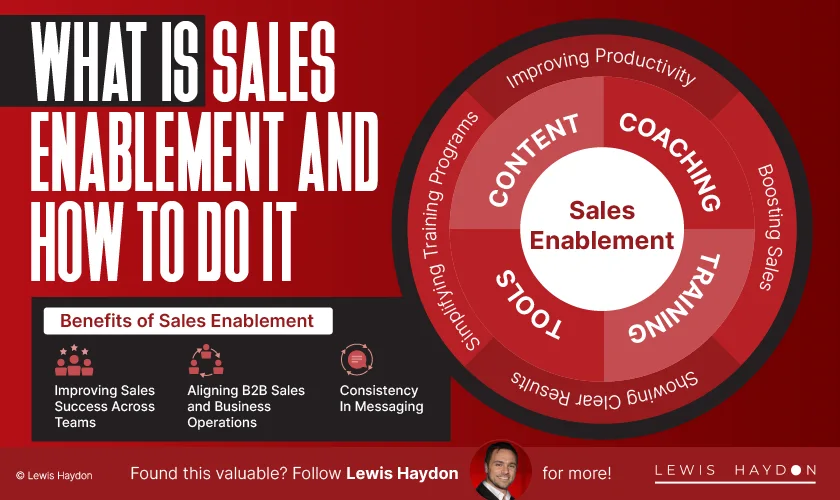
Sales enablement uses content, coaching, training, and advanced sales tools to help sales reps with onboarding, skill-building, and closing deals. Its main goals are improving productivity, boosting sales, showing clear results, and simplifying training programs.
Sales Enablement vs Sales Training
Sales enablement focuses on providing support, resources, and tools to help sales teams throughout the process, while sales training is about building specific sales skills. Sales training teaches techniques and knowledge to improve performance, win rates, and closing deals.
Unlike sales enablement, which is ongoing, sales training usually takes place in structured sessions or workshops. It focuses on skills like negotiation, prospecting, and communication.
Sales Enablement in Modern Organizations
Many companies are expanding sales enablement principles beyond the sales team to include marketing and customer success teams. This approach, called revenue enablement, aligns all customer-focused teams involved in driving revenue. By integrating a sales funnel strategy, companies can ensure that prospects move seamlessly through each stage—from awareness to conversion—creating a smooth customer experience across pre-sale interactions, the sales process, and post-sale support.

Key Components of Sales Enablement
- Sales Strategy: A clear sales strategy aligns your enablement process with your company vision and core message, creating a solid foundation.
- Sales Content: Offer materials like pitch decks, case studies, email templates, and product sheets to guide reps through the buyer’s journey. The content should be easy to consume and reusable across the entire sales organization.
- Sales Training: Provide ongoing training to build skills, product knowledge, and insight into customer needs.
- Tools and Sales Enablement Technology: Leverage CRMs, sales platforms, and analytics tools to streamline processes and boost efficiency.
- Sales Metrics: Use data to measure and improve the success of your sales enablement efforts over
Building a Sales Enablement Strategy
A clear sales enablement strategy helps sales leadership align the team, streamline processes, and support growth. Here are some of the best practices to follow:
Setting Your Sales Enablement Goals
Define your goals for sales enablement. Focus on clear objectives such as increasing sales, improving efficiency, or cutting costs.
Matching Content to the Buyer’s Journey
Create content that fits each stage of the buyer’s journey. Plan your sales enablement steps to address common challenges and give your sales teams the support they need to handle them.
Understanding Your Audience
Know who your audience is to make sure your content and efforts are relevant. When you understand your audience, you can create sales enablement programs that connect with them and encourage engagement.
Tracking Progress
Measure the effectiveness of your sales enablement strategy using metrics such as customer retention, win rates, closed deals, sales cycle length, and engagement. Track what’s working and what needs improvement.
Keeping It Updated
Sales enablement is an ongoing process. Regularly review and adjust your sales enablement solutions to keep them effective and aligned with your business goals.

Benefits of Sales Enablement
Sales enablement helps improve your team’s sales performance and supports business growth.
Improving Sales Success Across Teams
A strong sales enablement process equips your team to close more deals, work efficiently, reduce costs, and stay motivated. With the right sales enablement tools and resources, they can work smarter and achieve better results at every stage.
Aligning B2B Sales and Business Operations
Focusing on sales enablement improves collaboration between marketing and sales. It removes friction—sales teams stop criticizing marketing content, and marketing sees their resources being used effectively. This alignment supports consistent messaging, better customer experiences, and improved performance tracking, helping teams hit their targets and grow overall sales.
Consistency
Consistency in messaging is key to sales enablement. Training your team to use the same language ensures clarity while allowing them to personalize their communication. This approach helps sales reps stay on brand while connecting with their audience.
Common Challenges in Sales Enablement
Solving common challenges in sales enablement is important for building an effective sales process.
Key teams are often misaligned
Sales enablement works best when teams collaborate, but too often, sales, marketing, sales operations, and enablement end up working in silos. This disconnect leads to inefficiencies—like marketing creating content that sales don’t actually use.
To fix this, sales enablement teams should hold regular check-ins and ensure everyone works on the same sales enablement platform to align on goals and roles. If you haven’t done so already, choose someone to be the sales enablement manager or lead.
Sellers are overloaded with tools
Sellers need tools, but having too many can lead to frustration and lower productivity. Nearly 70% of sales reps feel overwhelmed by their tech stack.
Simplifying tools into one integrated platform helps streamline workflows, making it easier for sales teams to focus on their work instead of managing multiple systems.
Sales enablement content is poorly managed
Content is a key part of sales enablement, but when it’s disorganized, reps waste time searching or guessing what to use. Organizations should use a content management system that organizes and categorizes resources. Some platforms can even suggest the right content, helping reps find what they need quickly and easily. Additionally, one on one sales training can complement these resources, ensuring reps not only access the right content but also know how to use it effectively in their sales conversations.
FAQs
How does sales enablement drive revenue?
Sales enablement equips sales teams with sales tools, training, and resources to engage prospects and close deals. It streamlines workflows, ensures consistent messaging, and lets reps focus on building relationships and driving opportunities forward.
What metrics matter for sales enablement success?
Key metrics for measuring sales enablement success include content usage rates, win rates, and sales cycle length. Content usage rates show how often sales reps use the resources provided, indicating the relevance and ease of access to sales materials.nnWin rates track the percentage of deals closed compared to opportunities, reflecting the effectiveness of the sales enablement strategy. Tracking sales cycle length helps evaluate how well enablement efforts simplify processes and reduce delays. Monitoring these metrics ensures a clear, data-driven approach to improving sales enablement.
How can small businesses start with sales enablement?
Small businesses should align their sales and marketing teams for clear messaging and strategy. Consider creating a shared library of sales content that sales teams can easily access. Also, basic sales training should be provided to build product knowledge and communication skills. Use affordable tools like CRMs or content platforms to simplify processes and track progress. Regularly update your resources based on sales feedback to keep improving. Starting small and growing over time helps small businesses see quick results while preparing for long-term success.