A great sales pitch grabs your prospect’s attention and gets them excited about what you’re offering. It’s a way of telling a story that resonates with them and makes them want to take the next step.
In this guide, we’ll show you how to use storytelling to influence decisions and close more deals. You’ll also learn the key elements to include in your sales decks and practical tips for presenting them effectively.
What is a Sales Pitch?
A sales pitch is a short, direct presentation that explains the value of your product or service in under two minutes. Sales reps might deliver it over a sales call, via email, during a meeting, at a networking event, or even in passing. Learning how to improve sales skills can help reps craft and deliver pitches that capture attention, engage the audience, and motivate them to take the next step—whether that’s making a purchase, booking a demo, or continuing the conversation.
Why Sales Pitches are Important for Businesses
A winning pitch interests your prospects and motivates them to act. It’s about telling a story that speaks to their goals, needs, and challenges. Sales teams create pitches to help build a connection, earn their trust, and show how your product or service solves their problem in a way that makes sense for them.
Types of Sales Pitches
We’ve covered the importance of sales pitches. Now, let’s focus on the different types of sales pitches.
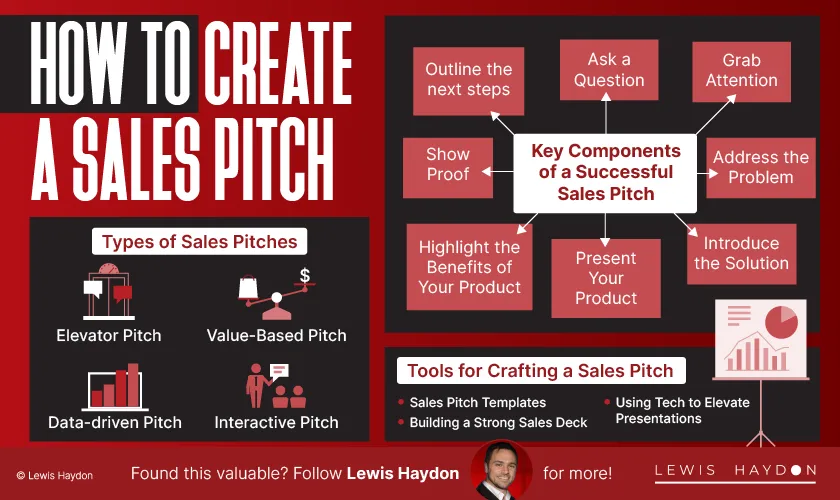
Elevator Pitch
If you met your ideal customer in an elevator, how would you introduce yourself, explain your business, and ask to stay in touch before they step off? That’s the elevator pitch. In 30-60 seconds, it’s a clear, concise explanation of what your company offers. The goal isn’t to make a sale but to spark interest and start a second conversation. Here’s an elevator sales pitch example: “Hi! I’m from Innovative Solutions Company, and we provide innovative marketing solutions for small businesses. We help boost visibility, attract customers, and increase revenue. Let’s connect to see how we can support your goals.”
Data-driven Pitch
Using clear data like numbers, statistics, and examples gives your pitch more credibility and helps you win over potential customers. It’s easier to counter objections with facts than vague claims or gut feelings. Data also lets you focus on your audience’s specific needs and behaviors, making your pitch more relevant and effective. Showing that you’ve done your homework and understand their challenges builds trust and makes your solution more convincing. A data-backed approach doesn’t just make your pitch stronger—it makes it smarter.
Value-Based Pitch
As a sales professional, you know customers often resist change. Even considering a new solution can take effort. Value-based sales identify dissatisfaction with the current situation and show how your solution solves specific problems. This type of sales pitch positions you as a trusted consultant, not just someone chasing a quota. It builds trust, strengthens relationships, and delivers results for both your customers and your business.
Interactive Pitch
Interactivity makes your pitch more engaging, turning a basic presentation or email into a conversation. Asking questions or involving your audience keeps them focused and involved. It also gives you real-time feedback to adjust your pitch to address concerns. Consider adding interactive elements to help build trust, encourages dialogue, and increases your chances of closing the deal.
Key Components of a Successful Sales Pitch
Crafting a sales pitch that works comes down to a few clear components:
- Ask a Question: Start with a simple, thoughtful question to understand the prospect’s needs and start a real conversation.
- Grab Attention: Use a one-liner that shows you know them and their challenges. Make them curious about what’s coming next.
- Address the Problem: Discuss their challenges. Show you understand their pain points without overcomplicating them.
- Introduce the Solution: Explain how your product or service solves their problem. Focus on what it does and the outcomes it delivers.
- Present Your Product: Show your product as the answer. Be clear about how it meets the needs you’ve discussed.
- Highlight the Benefits of Your Product: Skip generic features. Talk about how your product helps them explicitly.
- Show Proof: Share testimonials or other customer results to support your claims.
- Next Steps: Wrap up with a clear summary and outline the next steps. Ask for an action to keep things moving forward.

Steps to Create a Compelling Sales Pitch
Creating an effective sales pitch takes thought and planning. Here are some important steps to follow:
Do Your Homework and Research
Take the time to thoroughly research your prospects’ company and understand their challenges and needs. This will enable you to tailor your pitch and demonstrate how your solution can address their pain.
Frame It Around the Customer’s Needs
To deliver the perfect sales pitch, center your pitch around what matters most to the customer. Show empathy and focus on providing value by highlighting how your solution can solve their problems and meet their needs.
Tell a Story
Use the power of storytelling to capture attention and make your pitch memorable. Start with a compelling hook, weave in a narrative highlighting the problem and solution, and use visual aids to enhance your story.
Personalize Your Sales Pitch
If you want to make a sales pitch memorable, avoid using a generic pitch and personalize it to the individual prospect. Show that you have done your homework and understand their unique circumstances, challenges, and goals.
Connect Your Pitch to Stats and Data
Incorporate relevant statistics, data, customer stories, case studies, and testimonials to back up the claims and demonstrate your expertise. This adds credibility and builds trust with your prospects.
Switch Up Your Sales Pitch
Use different styles and approaches to keep your pitch dynamic and engaging. Experiment with techniques like beginning with a question or using catchy subject lines to maintain the prospect’s interest.
Adapt the Length of Your Pitch
Tailor the length of your pitch to fit the communication method and the audience. Be concise in email pitches, keep cold calls short and engaging, and adjust the duration of sales presentations based on your audience’s attention span and interest level.
Anticipate Questions and Objections
Be prepared to handle objections by building a case to overcome them. Listen actively, understand the objections, and provide persuasive responses that address the prospect’s concerns.
Tips for Pitching Successfully
These tips will help any salesperson deliver your pitch successfully:
Practice and Refine Your Pitch
A winning sales pitch takes practice. Rehearse to get your message clear and your delivery smooth. Practice helps you get comfortable with the flow and spot what needs fixing. Record yourself to see what works and what doesn’t. Ask for feedback from colleagues or managers to ensure your pitch connects with your audience.
Appeal to Emotions
Understand what drives your prospects and what holds them back. Tap into psychological triggers like social proof, authority, scarcity, and reciprocity to make your pitch clear and persuasive.
Follow-Up
Follow up after your pitch to keep the conversation going. Answer questions, share useful information, and highlight the value of your solution. Use digital sales rooms to create personalized virtual spaces where prospects can easily access content at their own pace.
Tools and Resources for Crafting a Sales Pitch
If crafting a pitch seems overwhelming, here are some tools and resources that can sharpen your sales pitch and help you deliver a clear, persuasive message.
Sales Pitch Templates
Creating a sales pitch is easier with the right template. Sales pitch templates give you a clear structure to explain your value, address customer needs, and outline key benefits. Using a tested formula saves time and lets you focus on tailoring the message to your audience so you can deliver it effectively every time.
Building a Strong Sales Deck
A good sales pitch deck grabs your attention and delivers your message. Use simple messaging, clean slides, and data to tell a story your audience connects with. Focus on their needs, keep the design straightforward, and use visuals to support your points. A solid sales deck informs, inspires action, and leaves a clear impression.
Using Tech to Elevate Presentations
Technology can make your sales presentations clearer and more engaging. Tools like interactive visuals, animations, and live data integration help you communicate ideas more effectively. Platforms like PowerPoint, Canva, or Prezi let you create presentations that look professional and are easy to follow. Smart use of tech keeps your audience focused and makes your pitch more impactful.
FAQs
How do elevator pitches differ from sales pitches?
An elevator pitch is a short summary of your product, service, or idea designed to grab attention quickly. Itu2019s meant to spark interest in the time it takes for a quick conversation. A sales pitch, on the other hand, is a longer, more detailed presentation tailored to the audience and focusing on showing how your product or service solves their problems. While an elevator pitch intrigues people, a sales pitch builds understanding and aims to close the deal.
What are key indicators of a successful sales pitch?
A strong sales pitch has specific elements that keep your audience engaged and improve your chances of closing the deal:nnClear Value Proposition: Explain exactly what your product or service does and how it solves your audience's problems.nStorytelling: Share examples or success stories that connect with your audience and highlight the impact of your product or service.nEffective Communication: Speak with confidence and clarity. Use simple language and visuals, and keep your points easy to follow.nActive Listening: Pay attention to your audience's concerns and questions. Address them clearly and with solid responses.nPersonalization: Tailor your pitch to the specific needs of your audience. Show that you understand their challenges and how your product fits their needs.nCall to Action: Outline the next steps, like booking a meeting, trying your product, or purchasing. Make it easy for them to act.
What mistakes should I avoid in a sales pitch?
When delivering a sales pitch, avoid common mistakes that can hurt your chances of success. Donu2019t be too pushy or aggressiveu2014it turns people off. Focus on building trust and a real connection. Skip the jargon and technical terms that might confuse your audience. Keep it simple and to the point. If someone raises a concern, listen carefully and address it directly. Ignoring objections wonu2019t win anyone over. Lastly, donu2019t make promises you canu2019t keep. Be honest about your product or service to build trust and lasting relationships.