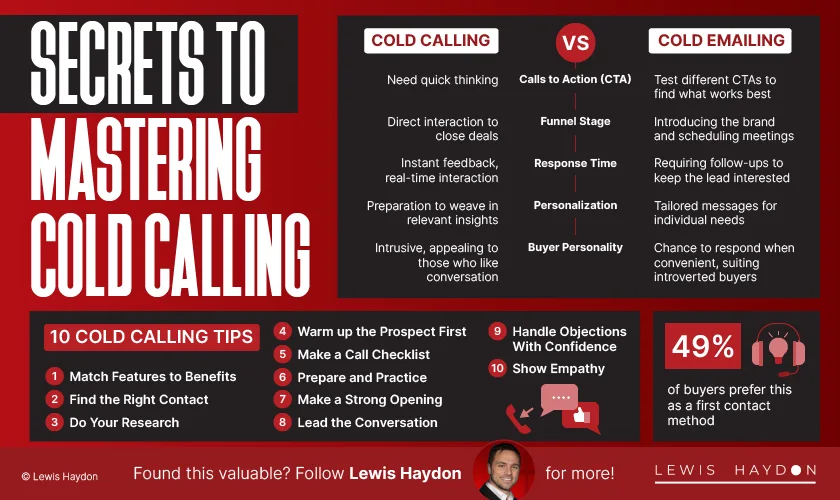
Do people still take cold calls? Surprisingly, yes. Even with digital communication everywhere, many sales prospects still answer cold calls. In fact, 49% of buyers prefer this as a first contact method, with the number rising to 50% for professional services and 54% for tech buyers. In a tech-driven world, personal connection still holds value. But making these calls can feel intimidating. Thankfully, improving the cold calling success is easier than you think. Equip your sales teams with the right tools and follow best practices, and you’ll see better lead generation and sales conversions with minimal effort.
What is Cold Calling?
Cold calling is a classic sales prospecting method that involves reaching out to potential customers who haven’t had prior contact with a salesperson. It’s one of the oldest telemarketing strategies to drum up new business. In contrast, warm calling means contacting people who’ve already shown interest in a product or company.
Importance of Cold Calling in B2B Sales
If picking up the phone for cold calling makes you uneasy, you’re not alone. Many salespeople see it as the toughest part of their job. Yet despite its “old-school” vibe, using cold calling works.
Cold calling has a success rate of about 2%. It sounds low, but the math adds up. A typical sales call lasts about 14 minutes. So, a call center worker making 20 calls daily hits 100 a week. With a 2% success rate, that’s two new customers per week per agent.
Cold Calling vs. Cold Emailing
When planning your strategy to reach clients, know the differences between cold calling and cold emailing. Each method targets different sales funnel stages and has its own perks.
- Calls to Action (CTA): Cold emails let you experiment more with CTAs. Sales teams can test different ones to find what works best. Cold calls need quick thinking, as trying different CTAs isn’t practical during calls.
- Funnel Stage: Cold calling works well for prospects later in the funnel, allowing direct interaction to close deals. Cold emailing is better at the start, introducing the brand and scheduling meetings.
- Response Time: Cold calls give instant feedback, creating real-time interaction. Cold emailing takes longer, requiring follow-ups to keep the lead interested.
- Personalization: Cold emails allow tailored messages for individual needs. Cold calls can be personalized too, with preparation to weave in relevant insights.
- Buyer Personality: Cold calls can seem intrusive, appealing to those who like conversation. Cold emails give recipients the chance to respond when convenient, suiting introverted buyers.

Preparing for a Successful Cold Call
The right cold-calling tips can help you feel more confident going into each conversation.
Researching Prospects and Their Pain Points
You need to know who they are and what they’re looking for to connect with prospects and turn them into customers. Before you start dialing, focus on two things: why your prospect might benefit from your product or service, and what might motivate them to invest. Use your CRM to gather info like job roles, industry, challenges, and their position in the customer life cycle. Tools like LinkedIn Premium or LinkedIn Sales Navigator can provide insights into their professional history and recent activities. This cold calling strategy, used by 74% of B2B sales reps, helps create personalized call scripts and offers, improving the chance of turning leads into customers.
Creating an Effective Cold Call Script
When you’re cold calling, give prospects plenty of chances to speak and ask questions, or they’ll lose interest. Start with a brief, personalized intro that shows you understand their needs and offer relevant solutions. According to Zippia, 42% of consumers appreciate being listened to during cold calls. Your script should cover key points but be flexible for natural interactions and adapt to responses. Prepare agents with:
- A clear roadmap to guide the call flow
- Answers to common questions
- Strategies for objections and handling upset customers
Consider tools like CloudTalk’s AI-powered Talk/Listen Ratio for insights into call dynamics, which can refine scripts and streamline call times, making interactions more efficient and impactful.
Setting Goals and Measuring Success Rates
Setting clear and achievable goals is key for a successful B2B cold calling campaign. Goals should be specific, measurable, attainable, relevant, and time-bound (SMART) to guide sales teams. Define what success looks like at each stage, whether it’s booking a set number of appointments or hitting a certain conversion rate, to keep teams focused and motivated. Regularly reviewing call performance against these goals is important. Track metrics like call duration, number of calls, and conversion rates. Customer feedback and data analytics tools help pinpoint areas for improvement and highlight winning strategies, ensuring adaptation in a changing market.
10 Cold Calling Tips
Mastering cold calling can improve your sales strategies, so here are ten tips to transform your approach.
1. Match Features to Benefits
When talking to prospects, don’t just list product features. Show how these features solve their pain points. Start by finding out the main challenges your audience faces and tailor your message to show how your product or service is the right solution. Connect each feature to a benefit, creating a narrative that matches your prospect’s needs. This approach grabs the prospect’s attention and explains why your offering fits, increasing the chances of a successful conversion.
2. Find the Right Contact
Finding the right contact in a company is key to effective cold calling. Talking to someone who can’t make buying decisions often leads to empty promises to pass on messages, wasting time for both you and the potential customer. This can hurt your performance goals. To avoid this, target decision-makers or people who can actually speed up the deal. Use tools like LinkedIn profiles or company websites to figure out who does what. This makes your outreach more efficient and effective.
3. Do Your Research
Before contacting a prospect, understand their challenges and background to see if you can help. Without this, expect rejection. Research not only helps you tailor your approach but shows you respect their time and want to provide real solutions. Use every tool, from company websites to social media, to gather insights into their needs. This information lets you create a personalized sales pitch, making it easier to show how your offer meets their needs and builds trust for future interactions.
4. Warm up the Prospect First
Before making a cold call, connect with prospects via email, InMail, or social media. This initial contact helps introduce you and your company, so you’re not a total surprise when you call. It shows you’ve done your homework and you’re ready to chat. This approach makes the conversation smoother and more engaging.
5. Make a Call Checklist
Creating a checklist helps ensure you gather and share all necessary information during a prospect call. It should cover the key points to capture, like the prospect’s challenges, decision criteria, and any specific needs or timelines. Include the main messages and benefits of your product or service. This method keeps you from overlooking important questions or missing details that help move the conversation forward and build a good relationship. Using this checklist will streamline your calls, help maintain focus, and improve your communication.
6. Prepare and Practice
Creating cold calling scripts tailored to your target industry and individuals is a key step in building a solid outreach strategy. These scripts act as a guide, making conversations easier and ensuring your communication is on point. However, don’t follow scripts blindly. Your tone, personalization, and how you modulate your voice can greatly affect the call’s outcome. A script helps keep you composed and deliver important info, but adjusting your dialogue to match the prospect’s attitude and needs will improve engagement and lead to better results.
7. Make a Strong Opening
Opening a cold call effectively is key. The first seconds shape the prospect’s impression, so make it count. Start by acknowledging you’re interrupting their day, showing respect for their time and easing any initial resistance. Politely ask if they have a moment for a quick chat. This approach creates a more welcoming atmosphere and shows that you respect their priorities.
8. Lead the Conversation
To effectively engage a prospect, talk about their pain points or interesting industry challenges and trends. Proper research is key to addressing issues that matter to your prospect. In the tech sector, for instance, you might mention the rise of automation and the challenges it brings, like skill gaps or integration issues. Use solid data, like industry reports showing X% growth in automation by 2025, to prove your knowledge. Sharing these insights shows you’re prepared and positions you as a capable partner offering solutions to their challenges. By leading with facts, you steer the conversation toward finding solutions, building trust and engagement.
9. Handle Objections With Confidence
Adapting to new methods often meets with hesitation. As a salesperson, your job is to tackle these worries with clear responses. Predicting every objection isn’t possible, but some concerns show up frequently across industries. Record sales conversations to spot these common objections. Use this info to plan responses and try different approaches. Being ready for pushback helps you handle objections confidently, building trust and making sales smoother.
10. Show Empathy
Showing empathy during cold calls is key to building rapport and connecting with prospects. When you understand and care about their needs, they become more open and you can tackle objections, building trust and upping your success rate. If prospects don’t feel you care, they might hold back. Try saying, “I get that this is a big concern” or “I’m here to help find a solution that works.” This shows you’re committed to supporting them and sets the stage for a more productive chat.

Examples of Cold Calling
These examples show the personalized nature of effective cold calling, focusing on industry insights and directly addressing the prospect’s needs.
Example 1: Technology Sector
Salesperson: “Hi [Prospect’s Name], this is [Your Name] from [Your Company]. I hope I’m not catching you at a bad time. I only need a few minutes to discuss an opportunity that could significantly enhance your team’s productivity. As you’re probably aware, there’s a substantial move towards automation within the industry, projected to grow by X% by 2025. I understand that this could present some challenges for companies like yours, especially concerning skill gaps and integration complexities. Can I share how we’ve helped companies similar to yours overcome these issues efficiently?”
Prospect: “Sure, I’m curious to see how that might work for us.”
Salesperson: “Great, we have developed a suite of solutions that not only streamline automation processes but also offer thorough training to bridge skill gaps. Would you be interested in a more in-depth discussion later this week to see how this can be tailored for your team?”
Example 2: Healthcare Sector
Salesperson: “Hello [Prospect’s Name], I’m [Your Name] from [Company]. I’m calling because we’ve identified emerging trends in patient care optimization that could be highly beneficial for your practice. I appreciate your busy schedule, could we have a quick chat to explore this further?”
Prospect: “This does sound intriguing, but what exactly does this entail?”
Salesperson: “We specialize in digital solutions that improve patient engagement and operational efficiency. Our recent implementations have resulted in a 20% increase in patient satisfaction for our clients. If you have some time next week, I’d love to show you how our solutions can integrate seamlessly into your practice, delivering similar results. Would you be open to a brief discussion?”