You might know your target customers as “women over 20” or “men in finance,” but a buyer persona goes further. It gives clear information about your customers’ behaviors, motivations, and needs, helping you better plan your strategies.
What is a Buyer Persona?
A buyer persona is a clear profile of your ideal customer. It’s a fictional character created based on research about your actual customers. Also called a customer persona or user persona, it combines traits of your audience into one profile.
While a single buyer persona can represent your main customer group, businesses with different products or audiences might need several personas to effectively cover different groups. This becomes especially important when targeting segments that require teams to improve sales skills and tailor their messaging to meet the unique needs of each audience.
Buyer Persona vs. Target Market
A target market is a broad group of potential customers defined by general demographics or audience segments, while a buyer persona is more specific and focused. For example, a company selling yoga accessories might define their target market as “women aged 35 to 45, living in cities, who practice yoga.”
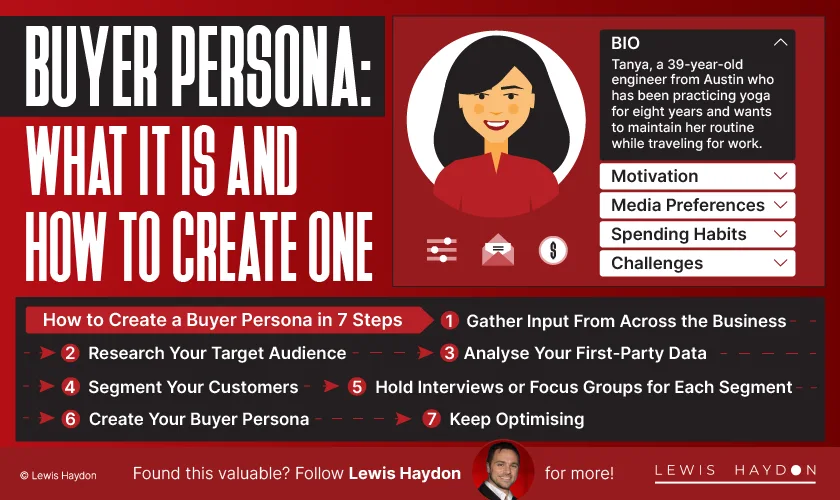
Their buyer persona, however, would describe someone like Tanya, a 39-year-old engineer from Austin who has been practicing yoga for eight years and wants to maintain her routine while traveling for work.
Why Are Buyer Personas Important?
Efficient Planning
Creating a buyer persona helps you focus your time and budget more effectively. It shows which content channels, formats, and topics work best at each stage of the buyer’s journey, making your planning easier.
Enhanced Messaging
A detailed buyer persona profile identifies the problems and motivations of your prospective customers. This helps you create clear and focused messaging that resonates and builds a stronger connection with your brand.
Less Guesswork
Without understanding your audience, you rely on guesses in your strategy. Building buyer personas ensures your marketing campaigns are based on data, making it more focused and effective.
Consistency
Buyer personas help keep messaging consistent across all marketing channels. Clear and steady messaging builds trust and helps your brand stand out, giving the same customer experience no matter how they interact with your content.
Performance Tracking
Buyer personas provide a guide for measuring how well your strategies work. Tracking how different personas interact with your content and monitoring conversion rates lets you refine your approach and improve results based on data.
Types of Buyer Personas
B2C Personas
If you sell directly to consumers, B2C buyer personas help you focus your marketing efforts. These personas focus on personal factors like customer preferences, trends, and psychological triggers, making it easier to connect with your audience.
B2B Personas
If your company sells to other businesses, you’ll need to focus on B2B buyer personas. These personas are people, too, but their decisions are influenced more by business needs. Understanding their industries, keeping up with economic trends, and studying your competitors will help you tailor your approach.
What Is a “Negative” Buyer Persona?
A negative buyer persona represents the type of customers a business wants to avoid in its marketing. These people are unlikely to be a good fit for the product or service or may be difficult to work with.

How to Create a Buyer Persona in 7 Steps
1. Gather Input From Across the Business
Creating buyer persona templates requires input from teams across your organization. Hold meetings with your sales teams, people from marketing, customer support, and product development to gather customer insights. Focus on real examples of customer concerns and experiences.
Ask questions like: What are common customer questions? What is a typical sales or support interaction like? What issues cause the most complaints, and how do customers express them? What topics get the most positive feedback, and what do customers say? This team-based approach helps build a clear picture of your customers.
2. Research Your Target Audience
After gathering input from customer-facing teams, expand your understanding with market research. Surveys can provide useful data, and many businesses work with outside research partners to learn more about their customers.
3. Analyse Your First-Party Data
Your company’s first-party data is a key resource for understanding your customers. This data includes details like demographics, spending habits, locations, and media preferences, providing useful insights into your audience.
4. Segment Your Customers
Segmenting your audience is important because customers have different needs. Group them based on shared traits or how they fit with specific products your company offers. This helps you target them more effectively. Most businesses use 3 to 8 personas, depending on their market and product range.
5. Hold Interviews or Focus Groups for Each Segment
To create effective personas, talk directly to your audience through interviews or focus groups. Contact customers, leads, or referrals and ask them to join. Offering small incentives like free gifts can increase participation by up to 19%. Involve enough people to gather useful insights while keeping the process simple. Plan your questions carefully to keep the interviews focused and productive.
6. Create Your Buyer Persona
With the information collected, it’s time to create your buyer persona. This means building a profile based on your gathered characteristics and insights. The personas you create will help guide your future content marketing strategies.
7. Keep Optimising
Over time your brand grows, new markets open up, and your existing customer preferences shift. To keep up, review your buyer personas at least once a year.
What Are The 5 Main Errors When Creating A Buyer Persona?
- Making too many assumptions
- Relying too heavily on demographic information
- Interviewing the wrong audience
- Creating too many personas
- Basing personas solely on stereotypes
How Does a Persona Affect Your Content Production?
Your buyer persona plays an important role in shaping your content marketing strategy by helping you make better decisions.
- Content Focus: A clear persona helps your content marketing team create content that speaks to your audience’s needs and interests while avoiding unnecessary ideas.
- Platform Choice: Knowing where your audience spends time allows you to focus on the best channels and formats, saving time and effort.
- Messaging Clarity: A strong persona helps you tailor your messaging to address their needs, making your brand more relevant and relatable.
You should review and update buyer personas once a year or whenever your business, audience, or market trends change. Regular updates help keep your content and strategies aligned with your audience. Tracking metrics, gathering customer feedback, and staying informed about industry changes can also help you update your personas effectively. You can use tools like HubSpot's Make My Persona, which walks you through the steps of creating personas, or Xtensio, a tool for designing persona templates. Resources such as Google Analytics and Facebook Audience Insights offer insights into audience behavior and demographics. Survey platforms like SurveyMonkey and Typeform are also great for collecting customer feedback. Talking to current customers or engaging with them on social media can provide valuable insights into their needs and preferences. Businesses can also look at competitorsu2019 audiences to find common traits. Basic demographic information and feedback from customer interactions can help build initial personas. Over time, as more customer input is collected, these personas can be updated and improved. Even simple personas can help guide marketing, personalization, and product development.FAQs
How often should buyer personas be updated?
What tools can help with creating buyer personas?
How can small businesses benefit from buyer personas without extensive data?