In today’s competitive business landscape, optimizing the sales funnel is important for turning interest into committed customers. Focusing on each stage of the funnel helps companies understand their audience’s motivations and challenges, improving the sales team’s ability to address these. Effective sales funnel management streamlines conversion and supports revenue growth.
This article will explore the structure of a strong sales funnel, highlighting strategies used by successful companies. You’ll also learn how to build a sales funnel for more significant impact.
What is a Sales Funnel?
Sales funnel software is a tool that shows the journey from a prospect’s first contact to a completed purchase. It illustrates each stage of the customer journey, helping the sales team spot where potential bottlenecks may occur. This view of the sales process helps identify stages where too many leads drop out. With these insights, reps can adjust their approach, follow up strategically, and practice how to develop sales skills by learning from real data to improve conversions and streamline the funnel.
Why Are Sales Funnels Important?
Understanding sales funnels helps guide potential customers through their buying journey, increasing conversion success.
Creates Customers
The goal of a sales funnel is to lead a business’s audience through stages, ultimately turning them into loyal customers.
Generates Referrals
An effective sales funnel for your business encourages satisfied customers to refer others who weren’t part of the initial audience.
Monitors and Tracks
A successful sales funnel lets organizations assess each stage of the sales process, make adjustments, and ensure efficient resource use. It also provides feedback as customers move through the funnel.
Focuses Efforts
One of the greatest benefits of a sales funnel is that it narrows a business’s focus to specific prospects, simplifying the process of reaching the target audience and turning them into customers. It filters out unqualified prospects by requiring potential customers to complete steps leading to a purchase.

Sales Funnel vs. Sales Pipeline
A sales funnel and a sales pipeline are tools for understanding the process of turning prospects into customers, but they offer different views. The sales pipeline focuses on the seller’s perspective, outlining steps the sales team takes to close deals and keep customers. In contrast, the sales funnel focuses on the buyer’s journey, showing the path from initial awareness to purchase. The sales pipeline is shown as a sequence from lead generation to sale closure, while the sales funnel is represented as a funnel, narrowing down prospects to actual customers. Interested leads engage with the seller during this process, seeking information and confirming their buying decisions. This structural difference shows each tool’s unique approaches in managing and evaluating sales strategies.
Stages of a Sales Funnel
If you want to create a sales funnel, you need to know all the stages.
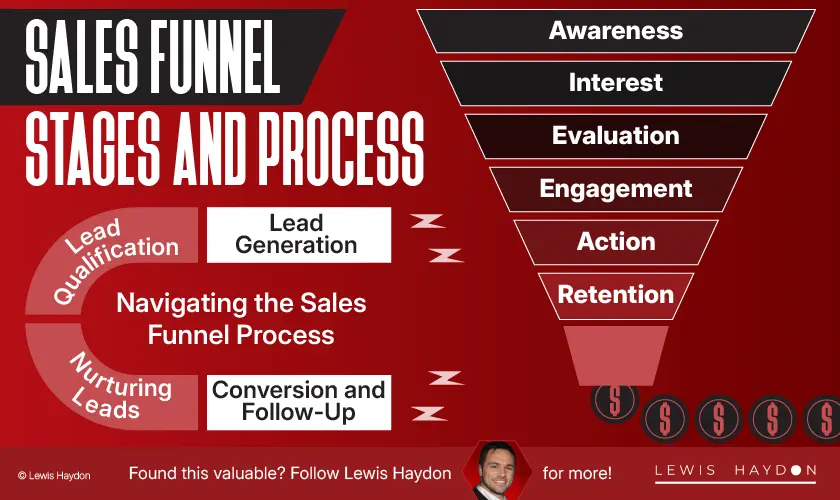
Awareness
Awareness is at the top of the funnel. Prospects need to know about your company to begin their journey through the sales funnel. This stage can start through methods such as word of mouth, cold calls, emails, social media, or sales podcasts. It’s important to have a clear list of ideal customers. As Ryan Reisert from NeonPixel advises, focus on a precise prospecting list to save time later. Contact the decision-maker to be efficient.
Interest
Interest plays a key role in the sales process. How you handle a potential customer’s interest affects your future relationship. Prospects show interest by filling out forms or reaching out directly. A quick response is important; at Cognism, a “speed to lead” strategy ensures reps contact potential customers within five minutes, improving the experience and encouraging progress to the next stage.
Evaluation
The first call is important for both customers and sales reps. Reps use this chance to qualify the prospect and see if their product fits, guiding them toward a decision. If a lead doesn’t fit, communicate this and save time. Once qualified, prospects usually research further, moving from the bottom to the middle of the sales funnel.
Engagement
Keeping your brand visible to high-value prospects is key during consideration. Emailing valuable content like whitepapers or case studies can help their decision-making. Simplifying engagement with concise content rather than many attachments helps. Focus on warmer leads and be ready to disqualify those not fitting your ideal customer profile.
Action
At this stage, your prospect has reached the bottom of the funnel and is ready to decide. If they proceed and sign, they join your customer base. Congratulations on gaining a new customer!
Retention
The sales funnel doesn’t end with a signed deal. Retention is important for ongoing revenue and increasing brand awareness for future sales. Continuously track sales funnel metrics to ensure a smooth path to conversions and maintain a successful funnel from start to finish.
Navigating the Sales Funnel Process
Understanding the sales funnel process involves guiding prospects from first contact to becoming loyal customers.
Lead Generation
Lead generation involves attracting interest in a product or service to build a sales pipeline. This involves using marketing strategies like content marketing, social media, and targeted ads to reach potential customers. The aim is to create interest and encourage prospects to connect with the brand. Effective lead generation requires understanding the target audience’s needs, allowing for creating content that draws them in.
Lead Qualification
After generating leads, the next step is lead qualification, which evaluates if a prospect is a good fit for the product or service. This helps prioritize leads based on their chance to convert, saving time and resources. It involves assessing the prospect’s needs, budget, and decision-making authority. Tools like lead scoring and CRM systems can help ensure sales teams focus on the most promising opportunities.
Nurturing Leads
Lead nurturing keeps prospects engaged who aren’t ready to buy. This involves building relationships with personalized communication, providing useful content, and addressing concerns. Email campaigns, educational resources, and timely follow-ups are common tactics. The goal is to guide prospects through the buying process at their pace, so when they’re ready, they choose the brand.
Conversion and Follow-Up
Conversion is when a lead becomes a customer, usually through a purchase. This is the result of previous efforts in lead generation, qualification, and nurturing. A smooth conversion process involves handling last-minute objections and ensuring a seamless buying experience. However, the sales process doesn’t stop at conversion; follow-up is important to keep customers happy and encourage repeat business. This includes checking in with customers after purchase, gathering feedback, and offering continued support or special offers to build loyalty.

Sales Funnel Marketing Automation Tools
Sales funnel marketing automation tools improve each stage of the sales process by automating tasks such as email campaigns, lead scoring, and customer follow-ups.
CRM Systems
CRM systems help manage interactions with current and potential customers. By organizing and analyzing customer data, they streamline processes, improve customer service, and increase profits. With automation, CRM systems track sales progress, manage leads, and provide insights into customer preferences and behavior, making the sales process more efficient.
Chatbots
Chatbots are automated agents that interact with website visitors and customers. They engage users 24/7, answer questions, and guide potential customers through sales. By providing quick support and personalized advice, chatbots improve customer satisfaction, increase conversion rates, and reduce the workload on support teams.
Email Marketing Automation
Email marketing automation lets businesses send targeted messages to their audience without manual effort. Companies can nurture leads more effectively by automating tasks like welcome sequences, follow-ups, and promotional campaigns. This tool helps maintain communication, increase engagement, and drive conversions by delivering the right content to the right people.
Lead Scoring Systems
Lead scoring systems automate the evaluation and ranking of prospects based on their likelihood to convert. By assigning scores to leads based on behavior, demographics, and engagement, businesses can prioritize high-quality leads and use resources more efficiently. This approach helps sales teams focus on prospects with the most potential.
Analytics and Reporting Tools
Analytics and reporting tools offer investor insights into marketing campaigns and sales funnels. By collecting and analyzing data, these tools help businesses understand customer behavior, track performance, and identify areas for improvement. Automated reporting allows real-time monitoring of marketing efforts, enabling informed decision-making and strategy adjustments.
Integration with Other Marketing Tools
Integrating marketing automation tools with systems like CRM, social media, and e-commerce platforms improves the sales process’s efficiency. This connectivity allows for data synchronization, streamlined workflows, and a consistent customer experience across channels. By unifying efforts, businesses ensure consistent messaging and better lead management.
Segmenting Audiences for Targeted Campaigns
Segmenting audiences involves dividing a broad market into smaller segments based on criteria like demographics, behavior, or interests. This approach lets businesses tailor marketing messages and offers to each segment’s needs. Automating segmentation allows for more personalized campaigns, increasing engagement and conversion rates.
Collaboration in the Sales Funnel
Effective collaboration in the sales funnel ensures smooth transitions between stages and improves team performance.
Sales Roles and Team Dynamics
Clear sales roles and team dynamics are key for collaboration in the sales funnel. Defining roles and responsibilities lets each team member use their skills towards shared goals. Regular communication and problem-solving improve team unity, leading to better sales results and customer satisfaction.
Aligning Marketing and Sales Efforts
Aligning sales and marketing is important for smooth collaboration in the sales funnel. When both teams work together, they can create a strategy that targets the right audience with consistent messaging. This helps nurture leads, turn prospects into customers, and increase revenue. Joint planning and data sharing ensure that both teams are working towards common goals, driving business growth.

Sales Funnel Examples
E-commerce: Audible
Audible, an Amazon-owned audiobook provider, attracts potential subscribers with a free one-month trial. This offer lets users enjoy 30 days of unlimited access before it automatically becomes a paid subscription. The free trial allows people to explore their audiobook library without financial commitment.
Service-based: HoneyBook
HoneyBook, designed for creative entrepreneurs, uses a sales funnel strategy through its business management software. A key feature is the business personality test, which acts as a lead magnet by offering insights. To get the results, users provide their email addresses. Based on their quiz results, HoneyBook enrolls users in an email campaign, offering business advice and the option to start a software trial. The personalized nature of HoneyBook’s test gives insights, encouraging users to try their software, making the lead magnet relevant to their needs.
SaaS: HubSpot
HubSpot focuses on sales funnel visibility, offering a template that helps businesses track and customize their deal stages. Visitors can access this resource by submitting their email addresses and joining HubSpot’s marketing list. After signing up, HubSpot sends content to improve its sales funnel.
HubSpot’s sales funnel template shows the company’s dedication to providing useful tools while growing its lead database.
Social Media: Sprout Social
Sprout Social attracts potential customers with research that acts as a lead magnet. Professionals can access this report by signing up with their business email, seeing Sprout Social’s skills in social media management. Sprout Social shows its leadership by offering research that appeals to and converts business professionals.
Retail: Tatcha
Luxury skincare brand Tatcha attracts customers with a 20% discount during their friends and family sale. Customers can obtain this discount by submitting their email on Tatcha’s website, which adds them to the brand’s email list. This approach identifies leads interested in their products and encourages customer loyalty by offering a reduced price.
FAQs
What mistakes should be avoided in sales funnels?
When developing a sales funnel, avoid common mistakes to ensure it works efficiently. First, not clearly defining the target audience can lead to unfocused marketing and low conversion rates. Know your ideal customer and tailor your strategies for them. Also, disengaging leads throughout the funnel can result in lost opportunities; regular follow-ups and personalized communication help maintain interest and build relationships. Another mistake is not aligning marketing and sales teams, which can create disjointed efforts and inconsistent messaging. Lastly, using outdated or ineffective tools can limit tracking performance and optimizing the funnel, so using the latest technology for automation and data analysis is important.
How can sales funnels adapt to different industries?
Sales funnels can adapt to different industries by tailoring their stages and marketing strategies to the specific needs of each sector. For example, in e-commerce, sales funnels often use digital marketing techniques like targeted ads, personalized emails, and product recommendations to drive online sales. The B2B sector may focus on building long-term relationships through consultative selling and providing detailed product or service information. Industry-specific data and analytics can help refine targeting and messaging, ensuring the funnel meets customer expectations and buying behaviors. Customizing the approach to fit the industry can improve the sales funnel's ability to convert prospects into loyal customers.
What metrics should you track in a sales funnel?
Several key metrics help track a sales funnel's effectiveness and areas for improvement. The conversion rate shows the percentage of prospects moving from one stage to the next, helping identify where prospects drop off. Lead velocity rate measures the speed at which leads move through the funnel, assessing sales process efficiency. Customer acquisition cost (CAC) shows the cost-effectiveness of marketing and sales efforts. Tracking the lifetime value of a customer (LTV) helps understand long-term revenue potential. Other important metrics include average deal size, sales cycle length, and customer retention rate, which together provide a clear view of the funnel's performance.
How does SEO influence sales funnel performance?
SEO helps improve sales funnel performance by making a business's website more visible and accessible. A well-optimized site attracts more organic traffic from search engines, bringing in targeted prospects at the start of the funnel. Using the right keywords, creating quality content, and ensuring a good user experience can attract visitors who are more likely to engage and convert. SEO also builds brand credibility and authority with potential customers, encouraging them to move through the funnel. Aligning SEO with different stages of the sales funnel ensures content meets the needs and questions of prospects, leading to smoother transitions and higher conversion rates.