The Customer Ladder of Loyalty is a simple model that illustrates how people move from first awareness to deep commitment over time. It shows the stages customers go through as their relationship with a brand develops, from casual interest to genuine advocacy. Rather than focusing only on customer acquisition, the ladder allows businesses to think about the full customer journey and the long-term value it creates. When understood properly, it helps businesses understand where customers sit today and how to move them upward with purpose, consistency, and care, creating stronger customer relationships that support sustainable growth and long-term loyalty.
What is Customer Loyalty Ladder?
This framework explains the relationship levels people move through as they engage with a brand, one phase at a time. Early on, awareness is light and expectations are low. Over time, behaviour changes. Confidence grows, repeat business becomes natural, and price matters less. At the highest level, customers actively promote the brand because loyalty and trust feel earned. What matters is the progression, not speed. Each stage needs attention. When businesses understand this flow, they can build loyalty deliberately, strengthen relationships, and increase customer lifetime value without forcing outcomes or rushing connections that take time to settle.
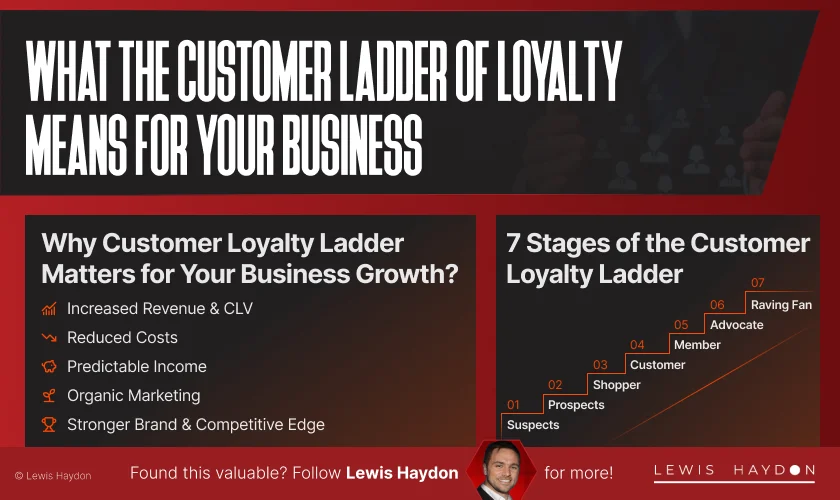
7 Stages of the Customer Loyalty Ladder
Not every customer starts at the same place, and that’s the point. The seven stages show how connection to a brand develops over time, without shortcuts. Awareness leads to consideration, purchase, and eventually commitment and advocacy.
Each stage reflects a real shift in behaviour. When businesses see where people truly are, marketing strategies sharpen. Communication becomes relevant, customer experience improves, and relationship or brand loyalty grows naturally. This clarity makes it easier to encourage customers to share their experiences, because trust is built steadily, not forced.
1. Suspects
Suspects sit quietly within your target market. They may need your product or service, but there’s no relationship yet. Maybe they noticed your name once. Maybe not. There’s no commitment here. The job is simple. Be visible. Be credible. Plant recognition. This early clarity matters because it’s where trust starts forming, long before you try to build loyalty or ask for anything back.
2. Prospects
Prospects are suspects who have shown interest. They might follow you, download content, or sign up for updates. They are considering whether your offering fits their needs and are comparing alternatives. This is where building trust and credibility becomes essential. Helpful content, honest answers, and staying in touch without pressure help move them forward. At this stage, the focus is not selling hard but demonstrating understanding. When done well, prospects feel informed rather than chased, which increases the chance they will take the next step of making a purchase.
3. Shopper
A shopper is someone actively evaluating options and close to making a decision. They may have compared pricing, read reviews, or explored features in detail. Their attention is focused, but loyalty is not yet formed. Small friction points can still stop progress. Clear value, reassurance, and a smooth buying process matter here. This stage often determines whether a new customer enters your customer base or disappears. Confidence, transparency, and customer satisfaction signals help reduce hesitation and support that crucial moment when interest turns into action.
4. Customer
A customer has completed their first purchase. This moment is more important than it appears, because expectations are highest right after buying. The experience around delivery, onboarding, and support shapes how the customer feels about the decision. If handled well, trust starts to form. If handled poorly, regret follows. At this rung of the ladder, the priority is follow-through. A positive first experience increases the likelihood of repeat purchases and lays the groundwork for customer retention, turning a single transaction into the start of a longer relationship.
5. Member
Members return because something clicks. The product or service works, the experience feels familiar, and the relationship shifts. A loyalty program, early access, or tailored communication reinforces that sense of belonging. This rung of the ladder is where relationship marketing shows up quietly. Recognition matters. Rewarding repeat business strengthens trust and encourages customers to stay, not out of habit, but because the connection feels worthwhile.
6. Advocate
Advocates talk about you when you are not in the room. They share positive experiences, recommend your brand, and leave reviews because they genuinely trust it. This word-of-mouth feels natural, not forced. Strong customer experience drives it. Advocates reduce customer acquisition costs and lift ROI. Listening to feedback, showing appreciation, and staying consistent helps turn loyalty into influence across your market.
7. Raving Fan
Raving fans are rare, and you feel it when you have them. They do more than stay loyal. They actively promote your brand, defend it, and bring others with them. Price barely registers. Trust and loyalty lead. These customers act like an unpaid marketing team, driving referrals, word-of-mouth marketing, and long-term growth without being asked.

Why Customer Loyalty Ladder Matters for Your Business Growth?
The customer loyalty ladder helps businesses understand that growth rarely comes from chasing the next lead alone. It comes from customer relationships that deepen over time. As you move customers upward, brand loyalty builds quietly. Buying becomes easier. Trust replaces persuasion.
Customers who are loyal stay longer, generate repeat business, and some evolve into brand advocates without being pushed. The ladder allows teams to align marketing efforts with real behaviour, not assumptions. It pulls attention away from short-term activity and toward loyalty that actually holds. Used properly, it creates steadier performance, stronger trust, and customer relationships that last.
- Increased Revenue & CLV: As people move up the ladder, lifetime value grows quietly. Repeat purchases feel natural, trust removes friction, and revenue stabilises. Retention replaces constant chasing, creating steadier growth from relationships already in place.
- Reduced Costs: A loyal customer base costs less to maintain. Fewer incentives, simpler communication, and more referrals reduce customer acquisition spend. As loyalty strengthens, customers become less likely to switch, easing planning and improving operational efficiency.
- Predictable Income: Loyal customers return with familiar patterns. That repeat behaviour creates predictable income and steadier cash flow. When trust exists, engagement continues through uncertainty, giving businesses resilience and confidence to plan without constant pressure.
- Organic Marketing: Satisfied customers share their experiences naturally. Word of mouth spreads because trust is real, not manufactured. This unpaid marketing team extends reach, strengthens reputation, and supports growth without heavy reliance on ongoing marketing efforts.
- Stronger Brand & Competitive Edge: Trust and loyalty create a brand that feels difficult to replace. Price matters less, switching feels unnecessary, and relationships last longer. That emotional connection becomes a competitive edge others struggle to copy.
How to Move Customers Up to the Ladder of Loyalty
Moving customers upward requires intention and consistency. Each stage demands a different approach, based on mindset rather than assumptions. The goal is not to rush progression but to support it naturally. Clear communication, reliable delivery, and ongoing value matter more than clever tactics. The ladder allows businesses to focus on the right actions at the right time, improving customer satisfaction while strengthening relationships. When progression feels earned rather than forced, loyalty grows steadily and sustainably.
For Leads and Prospects
Leads and prospects need clarity and reassurance. This is the stage to educate, answer questions, and demonstrate relevance. Content should speak directly to the market who needs your product, without exaggeration. Staying visible and consistent builds familiarity, while honest messaging builds trust. The aim is not immediate conversion but confidence. When prospects feel understood and informed, they are more likely to move forward willingly rather than feeling pushed into a decision they are not ready to make.
For First-Time Buyers
First-time buyers need reassurance that they made the right choice. Clear communication, smooth delivery, and accessible support matter most here. Small details shape perception. Follow-up messages, guidance, and responsiveness help build confidence quickly. This stage is about reinforcing trust and reducing doubt. When customers feel supported after making a purchase, they are more likely to return. A strong first experience turns a transaction into the foundation of a longer relationship.
For Members
Members benefit from recognition and added value. Personalisation, early access to sales, and relevant updates reinforce their decision to stay connected. This is where tiered loyalty programs can deepen engagement if used thoughtfully. The focus should remain on relevance rather than rewards alone. When customers feel valued, they engage more often and strengthen their connection to the brand. This stage supports repeat business while reinforcing trust through consistency and reliability.
Become Advocates
Turning customers into advocates is rarely about clever incentives. It starts with paying attention. Listening properly, responding without defensiveness, and acting on customer feedback shows respect across different customer groups. Referral programmes can support this, but they only work when the experience stands on its own.
When people feel heard, they talk. They recommend without being prompted. Over time, those conversations shape a loyal brand others trust. Advocacy grows when the relationship feels human, not transactional, and when customers sense balance rather than extraction. Done well, it creates lasting value for both sides, without pressure or constant persuasion.
How to Measure Ladder of Customer Loyalty?
Measuring progress means slowing down and watching behaviour honestly. Not what customers say once, but what they repeat. Metrics like repeat purchase rate, net promoter score, and engagement patterns show whether your actions actually keep customers coming back.
The real signal is movement over time. Forward, stalled, or slipping. That insight removes guesswork. It lets you refine decisions, improve customer experience, and focus on what works. When measurement stays grounded in reality, customers feel the difference. They stay longer, trust more, and start to share their positive experiences without being asked.
FAQs
Is the loyalty ladder relevant for small businesses?
Yes, and it often matters more. When your customer base is smaller, every relationship counts. The loyalty ladder helps small businesses focus on trust, repeat behaviour, and referrals instead of constant chasing. One loyal customer can steady growth, reduce churn, and quietly strengthen stability without big marketing spend.
How long does it take to build customer loyalty?
There’s no shortcut. Loyalty builds slowly, through consistency and real experience. Some customers warm up fast, others hesitate. That’s normal. What matters is staying reliable, listening, and improving over time. Loyalty isn’t triggered by a single moment. It forms through repeated proof that you can be trusted.
Can service-based businesses use the loyalty ladder?
They should. Services live or die on relationships. Every interaction leaves a mark, good or bad. The loyalty ladder makes those shifts visible. When service feels consistent and human, trust grows. Advocates follow naturally, and recommendations carry weight because people trust lived experience over promises.
What customer loyalty ladder metrics should I track?
Track movement, not vanity numbers. Repeat purchase rate, customer feedback, referral behaviour, and net promoter score reveal real relationship levels. What matters is direction. Are customers progressing or stalling? Patterns over time tell you far more than isolated metrics ever will.
What are the 4 C’s of customer loyalty?
Consistency, credibility, care, and communication. Miss one, and trust weakens. Get them working together, and loyalty becomes easier. Customers stay when brands feel reliable, honest, attentive, and present. That balance turns transactions into relationships and encourages long-term loyalty without pressure.