Some say that leaders are born, others say that leaders are made. Whichever is true, for businesses, it only matters if leaders can take on the challenges and steer the company in the right direction.
A great leader has traits that are easily seen. They are influential, inspiring, trusting, reliable, sharp when needed, and loved by their teams. It’s not easy to find a true leader, but investing in one is often the best strategy a CEO or owner can make.
What are Leadership Traits?
When we say leadership traits, we’re talking about the leader’s personal behaviour and attitude. These must define the person and turn him into a great leader. Using them, this person will easily navigate through tough times and challenges. This is why investing in leadership growth and upgrading these traits is essential.
Why are Leadership Traits Important?
Every company dreams of having a leader with strong traits. Everyone can learn the business and develop the skills needed to be a manager, but it takes something else to be a leader. Owning impeccable leadership traits is the difference that sets mediocre leaders apart from amazing ones. This type of person on the front lines of a business means pulling everyone forward and growing fast.

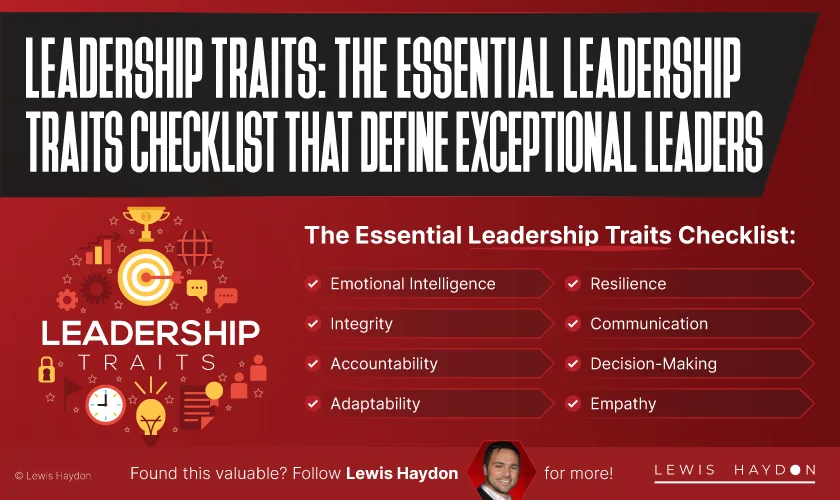
The Essential Leadership Traits Checklist
So what are these traits? What do they look like? What must a true leader own to be called an exceptional one? Here’s a list of things:
1. Emotional Intelligence
Emotional intelligence is one of the most essential skills of effective leadership. It helps leaders connect with team members, read emotions, and respond with empathy. Leaders who show emotional intelligence inspire others, strengthen communication skills, and build trust, all of which are vital for creating a positive and productive workplace.
2. Integrity
Integrity is one of the most valuable traits of a person, and for leaders, it is crucial. Those who have integrity act with honesty, but practice consistency in their decisions and reactions. When an employee comes with a problem, they know exactly how to react and will do it without hesitation. This inspires trust and reliability within the team.
3. Accountability
A great leader holds themselves accountable for decisions and outcomes. Accountability is one of the key qualities that makes a capable leader trustworthy. Leaders who accept responsibility enhance organisational morale, motivate others, and show individual team members that their work is valued and appreciated.
4. Adaptability
Adaptability allows leaders to shift their leadership style when challenges arise. This essential quality shows that leadership is a journey of learning and growing. Adaptable leaders inspire their team by facing change with courage, openness, and confidence, demonstrating the leadership abilities required to solve problems and drive organisational goals forward.
5. Resilience
Resilience helps leaders manage setbacks with determination. A resilient leader must keep morale high and motivate others even when facing difficulties. Courageous leaders with resilience inspire their team to remain focused, showing that leadership development involves practice and effort in building the strength to overcome obstacles.
6. Communication
Communication skills are among the most essential leadership qualities. Leaders who communicate clearly foster stronger relationships and create a culture of openness and trust. Great leadership depends on effective communication, as it helps inspire others, influence team members, and ensure organisational goals are understood and embraced.
7. Decision-Making
Decision-making requires courage, clarity, and the ability to take tough decisions when needed. This essential skill allows leaders to guide their teams with confidence. Effective leaders inspire their team by making informed choices that reflect ethical leadership, organisational values, and the key leadership qualities that define influential leaders.
8. Empathy
Empathetic leaders foster a culture of openness and show individual team members they are valued and appreciated. Empathy is one of the qualities of a good leader that helps inspire others and build stronger relationships. Leaders who practise empathy make a meaningful impact, motivating others and enhancing organisational morale.
How to Use the Leadership Traits Checklist?
The leadership traits checklist is not a one-time exercise but part of a leadership journey. A leader must revisit these essential qualities often, reflecting on their leadership characteristics and practising them in leadership roles. With consistent leadership training and a science in leadership programme, anyone can enhance their leadership and inspire their team effectively.
Leadership Traits vs Leadership Skills
Many do not see a difference between these two terms, but they are not the same. The traits are the personal qualities of the leader, and something that makes them capable of working in a team and running projects with multiple people involved. The skills are abilities that all people can learn through training and education. To be an excellent leader, you must own both.
FAQs
Can someone be a successful leader without strong leadership traits?
It is not possible to be a successful leader without it. You might be highly skilled and experienced in the business, but to lead and run a team, it takes something else. You need to own traits that will build trust and reliability. Only this way will people follow you and work for the same goal as you.
Can effective leadership traits change over time?
Although some love to say that leaders are born and not made, the truth is that traits change over time whether we like it or not. Most leaders will practice and try hard to upgrade their skills and leadership style, but only some will succeed. Those who do it will become better and take on more responsibility, only to lead the business in the right direction and see it grow under their leadership.
How do leadership traits influence the work environment?
Leaders with strong traits are easily reshaping the office. Their strong presence instantly influences the productivity and motivation of the entire team. If the leader owns the right traits and is highly motivated and productive, they will push everyone else to do the same. On the other hand, a person who is opposite to this will drag the team down with them.