What sets great leaders apart? It’s never just one trait. Integrity, vision, and accountability—they are all essential leadership qualities that make great leaders. But leadership isn’t simple. It’s full of contradictions. Leaders inspire yet make tough decisions. They’re clear communicators but adapt in the moment. Like juggling, some days everything flows; other days, it doesn’t. Leadership is a balance built on navigating imperfections and constant growth.
What are Leadership Qualities?
Leadership isn’t about having all the answers—it’s about facing uncertainty with empathy and adaptability. Think of it like navigating rush-hour traffic. You won’t always find the quickest route, but how you adjust defines the journey. Can anyone lead? Perhaps. Strong leadership emerges in tough moments, in small, genuine actions that build trust even when the path isn’t clear.
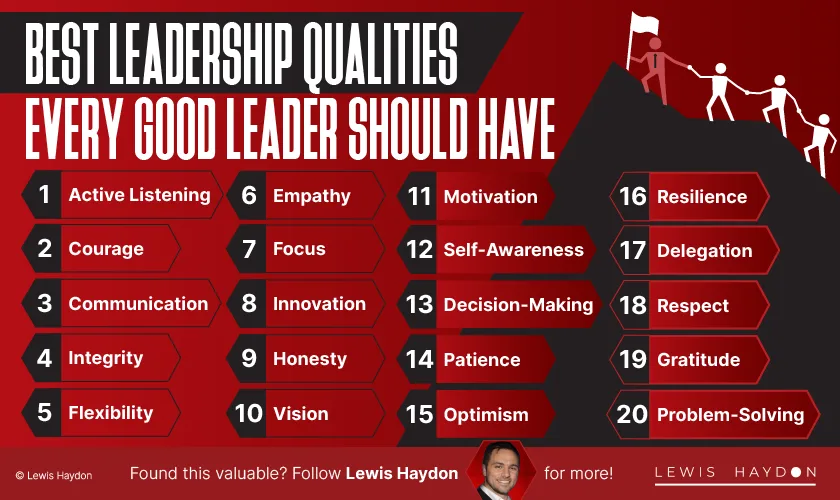
Best 20 Leadership Qualities Every Good Leader Should Have
How do you see yourself as a leader? What leadership traits do you need to become a better leader? Focusing on these essential qualities can help you grow into a more effective leader.
1. Active Listening
Listening isn’t just nodding or waiting for your turn to speak. It’s about really being there—catching the details, letting them sink in, and showing you care. Ever had that friend who remembers the smallest things you’ve said? That’s active listening. As a leader, tuning in builds trust. It’s not about having the perfect reply; it’s about making people feel heard.
2. Courage
Leadership is messy. It involves making decisions when the path is unclear, which is why successful leaders need specific leadership skills. Courage is one of the essential qualities of a good leader. It’s about taking risks and owning the results. It’s not about always being confident—it’s about acting despite doubts. Great leadership means leading with courage and inspiring team members to face challenges head-on, even when the waters are far from calm.
3. Communication
Explaining things clearly is harder than it looks. Ever tried teaching someone a new game? Go too fast, they’re lost; too slow, they’re bored. Effective communication is finding that sweet spot. It’s about setting expectations, truly listening, and following up. Leaders who have good communication skills can guide their teams with clarity. It’s not about talking more—it’s about connecting.
4. Integrity
Integrity shows in the small, quiet choices. Like returning a wallet you found, even if no one’s watching. It’s sticking to your values, even when it’s inconvenient. Leaders with integrity earn respect by being consistent, especially during tough calls. Their actions set the tone, creating workplaces where fairness and trust aren’t just ideals—they’re habits.
5. Flexibility
Plans rarely go as expected. Deadlines shift, priorities change. Flexibility means adapting without losing momentum or focus on organisational goals. Think of it like rearranging a puzzle when the pieces suddenly don’t fit. Leaders who stay flexible don’t just manage change—they use it. By embracing uncertainty, they inspire their teams to see challenges as opportunities for growth.
6. Empathy
Empathy is about pausing to see the world through someone else’s eyes. It’s like holding the door for someone with full hands—a small act, but it matters. Empathetic leaders connect by understanding their team’s highs and lows. They create spaces where people feel valued and supported. It’s not about fixing everything—it’s about being there.
7. Focus
Distractions are everywhere. Staying focused feels like trying to read a book while your phone buzzes non-stop. Leaders with focus know when to tune out the noise and dial in on what matters. They balance the day-to-day with long-term organisational goals, helping their teams move forward with purpose. It’s not about speed—it’s about direction.
8. Innovation
Innovation isn’t always groundbreaking. Sometimes, it’s rethinking your morning routine for a smoother start. Leaders who value innovation create spaces for fresh ideas. They know progress often starts with small, awkward steps. By encouraging experimentation, they spark creativity and help their teams find new ways to grow and adapt.
9. Honesty
Honesty builds trust, but it’s not always easy. Imagine a friend giving you their real opinion—it might sting, but it strengthens the bond. Leaders who are upfront create an environment where feedback flows freely. This openness makes collaboration easier. It’s not about being brutally honest; it’s about being real and constructive.
10. Vision
A clear vision is like giving directions with a map. It’s not just about the goal but the journey, too. Leaders with vision paint a picture of where they’re headed and why it matters. They align their teams by sharing purpose and strategy. It’s not about having all the answers—it’s about inspiring others to move forward together.
11. Motivation
How do you keep a team energised day in and day out? It’s tricky. Motivation doesn’t come in one-size-fits-all. For some, it’s celebrating small wins, like nailing a tricky project. For others, it’s about feeling like they belong. Leaders who encourage growth and recognise effort—no matter how small—ignite that drive. And when people feel motivated? Productivity naturally follows, one step at a time.
12. Self-Awareness
Self-awareness means knowing your strengths and weaknesses. Do you recognise when to take charge and when to step back? It’s tough. However, self-aware leaders manage emotions better and are more willing to ask for help. That openness creates balance, making teams feel supported. It’s not about being perfect; it’s about being present enough to self-reflect and course-correct.
13. Decision-Making
Decisions can be messy. It’s easy to rush or overthink. But good decision-making balances confidence with careful thought. Not every situation has a clear answer, right? Leaders who weigh outcomes and align decisions with team goals set the tone. Even in uncertainty, they step forward with integrity, providing direction. Sometimes, it’s about reassurance, even when the path isn’t perfectly clear.
14. Patience
Patience isn’t passive—it’s active. It’s letting someone struggle through a task instead of stepping in. Like watching a plant grow, progress takes time. Great leaders guide without rushing, trusting the process. Sure, it’s frustrating when results don’t come right away. But patience shows confidence in your team’s growth. Over time, that steady hand can make all the difference.
15. Optimism
Optimism isn’t about ignoring problems. It’s reframing them. A missed deadline? A chance to reassess priorities. A failed pitch? Maybe it’s a lesson in disguise. Optimistic leaders shift the focus to what’s possible, even in challenges. It’s not blind positivity—it’s grounded hope. Even small doses of optimism can shift perspectives and keep morale afloat when things feel uncertain.
16. Resilience
Resilience is sticking it out when things get tough. It doesn’t mean brushing off setbacks—it’s acknowledging them and moving forward anyway. Think about leaders who adapt when plans fall apart. They don’t crumble; they pivot. That attitude shows teams that roadblocks aren’t the end—they’re just part of the journey. Resilience keeps everyone focused on what’s next, not what went wrong.
17. Delegation
Delegation isn’t just handing off work. It’s about trust. Sure, doing it yourself might feel faster, but stepping back empowers your team. It’s like teaching someone to ride a bike—at first, you hold on, but eventually, you let go. Leaders who delegate send a clear message: “I trust you.” And that trust? It builds confidence and ownership, two things every team needs to thrive.
18. Respect
Respect is the foundation of teamwork. It shows you value every contribution, big or small. In meetings, do you really listen to ideas—or just wait your turn to talk? Respect means creating space for voices to be heard. Leaders who actively listen and welcome different perspectives foster a sense of inclusion. And when people feel respected, they give their best.
19. Gratitude
Gratitude is about being specific, not vague. A quick “thanks” is nice, but calling out what someone did—staying late, solving a problem—goes further. It’s about showing people their work matters. And when gratitude spreads—leader to team, team to leader—it creates a culture where everyone feels valued. Those small moments of appreciation ripple outward, strengthening the whole team.
20. Problem-Solving
Problem-solving isn’t always linear. Sometimes it’s trial and error. Other times, it’s stepping back to see the bigger picture. Think of it like solving a puzzle with missing pieces—it takes creativity and logic. Great leaders stay calm, balancing fresh ideas with realistic solutions. By doing so, they guide teams through obstacles, keeping everyone focused on moving forward, one challenge at a time.

Ways to Develop Good Leadership Qualities
Aspiring leaders must develop certain soft skills to show they’re ready for the role. Can leadership grow in the workplace? Through community projects? Let’s explore practical ways to build these abilities.
Be a Follower
Leadership starts with knowing when to follow. Let’s face it—your ideas won’t always be the best. Great leaders recognise this and step back so others can shine. It’s like letting someone else DJ a party; you might hear something you didn’t expect but end up loving. Following well isn’t a weakness. It’s learning, growing, and gaining fresh perspectives.
Resolve Conflicts
Conflict is messy but unavoidable. Ignoring it? That’s like leaving a dripping faucet—it doesn’t fix itself. Think of disagreements as puzzles where the pieces seem off but can fit with effort. Leaders who embrace empathy and guide these moments build stronger bonds. It’s not about avoiding friction; it’s about steering it toward solutions that benefit everyone.
Take on More Responsibilities
Leadership doesn’t mean doing everything—but stepping up matters. When your team’s overwhelmed, can you take on the extra tasks? Think of it like lending a hand during a chaotic family dinner—you may not be the cook, but washing dishes leaves an impression. These small actions foster trust and show that you’re willing to carry the weight when needed.
Empower the Team
Recognition goes a long way. It’s like clapping for someone crossing the finish line—it fuels their energy. Empowering others isn’t just about praise, though. Delegating meaningful tasks shows trust in their skills. It’s handing over the camera at an event, letting them capture their own view. Leaders who empower their teams inspire confidence and growth.
Be More Decisive
Decisions are hard. But delaying them? Even harder for your team. Someone has to pick the movie on Friday night, even if not everyone’s thrilled with the choice. Good leaders weigh options, make the call, and pivot if needed later. Clear decisions keep the team moving, even when the outcome isn’t perfect.
Identify Your Leadership Style
Leadership isn’t one-size-fits-all. Maybe you connect through motivation. Or maybe you thrive on setting precise goals. Reflect on when you’ve felt in sync with your team—those moments reveal your natural style. It’s like your coffee order—some might prefer tea, but your choice fuels you. Embracing your style helps you lead with confidence and authenticity.
What is the Importance of an Effective Leader in Business?
Leadership is rarely straightforward. It’s more like adjusting sails to match shifting winds—always changing, always adapting. What works in one moment might fail in another. So, what makes a leader effective? It’s understanding when to listen, when to guide, and when to step back. Good leadership can boost productivity, spark innovation, and build stronger teams. But it’s a process, not a formula, shaped by real people and real challenges.
What is the Best Quality a Leader Should Have?
Empathy isn’t just a leadership buzzword—it’s the glue that holds teams together. How can you lead without understanding others? It’s not just listening; it’s valuing. Picture a road trip. A map helps, but knowing your passengers matters more. Empathy transforms plans into connections. It’s imperfect, messy even, but that’s what makes collaboration real.
FAQs
Can anyone be a great leader?
Is leadership innate, or can it be learned? Itu2019s a bit of both. Sure, some seem born for it, but think about itu2014skills like motivating others or making tough calls arenu2019t static. They grow with effort. Leadership is like cooking; you improve by experimenting, failing, adjusting, and trying again.
What is a positive leadership quality?
Adaptability defines effective leadership. Change is unpredictable and often messy, like navigating sudden traffic. You pause, rethink, adjustu2014maybe even take a wrong turn. But thatu2019s the point: flexibility isnu2019t flawless, itu2019s functional. Leaders who embrace the stumble are those who find new paths. Isnu2019t growth built on those imperfect moments?
How will you prove your leadership qualities?
Leadership isnu2019t about being flawlessu2014itu2019s about how you recover. Mistakes? Think of them as stepping stones. Learning to cook? Youu2019ll burn a dish or two. Growth works the same way: stumble, adjust, repeat. Each misstep teaches something new. Real leaders evolve, just like anyone, mastering a skill through trial and error.