Servant leadership is about supporting and serving team members rather than seeking power or recognition. It emphasizes humility, teamwork, and helping others grow, fostering a positive work environment.
This article explains servant leadership, its pros and cons, key principles, and practical ways to use it. Leaders can decide if this style aligns with their organization’s goals.
What is Servant Leadership?
Servant leadership is one of the leadership theories that talks about putting others first. Instead of focusing on results, a servant leader creates a space where their team can thrive and do meaningful work.
Robert K. Greenleaf described two kinds of leaders: servant-first and leader-first.
Leader-first leaders prioritize their own goals and often use their team’s performance to advance their careers. Servant-first leaders put their team’s needs ahead of their own authority. They focus on the well-being and commitment to the growth of their team members. When leaders focus on serving their teams, they inspire others who are likely themselves to become servants, continuing this positive cycle of leadership.
While “leader” and “servant” might seem like opposites, leaders who serve others offer purpose, support, and clear direction. This helps team members feel valued and motivated to succeed.
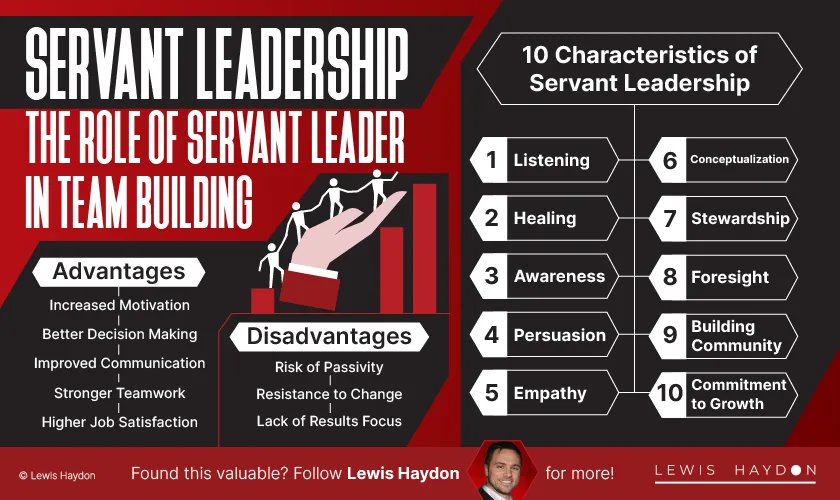
Advantages of Servant Leadership
The concept of servant as leader brings many benefits to the workplace. It helps create a supportive and productive environment. Here are the main advantages:
Increased Motivation
Servant leaders focus on helping others grow and reach their potential. They encourage team members to face challenges and support their development in both work and life. This leadership approach builds trust in the workplace, strengthens connections, and promotes teamwork. As a result, teams feel more engaged and motivated, creating a space where creativity and success flourish.
Better Decision Making
Servant leaders focus on listening to their teams and understanding their viewpoints. This helps them make better decisions and reduce errors. They foster a collaborative environment built on trust and open communication. Employees feel appreciated and are more likely to share ideas that lead to success.
Improved Communication
Servant leaders focus on clear and honest communication. They create a space where team members feel valued and heard. This reduces confusion and strengthens relationships within the team. When people feel their input matters, they collaborate better and share their best ideas. Honest communication also builds trust, which is key to long-term success and a healthy workplace.
Stronger Teamwork
This leadership style promotes teamwork and encourages problem-solving as a group. It builds unity and trust within teams, helping individuals feel more connected to each other. Stronger team bonds lead to better communication and a shared purpose. Leaders who focus on collaboration often see their teams more motivated and aligned toward success.
Higher Job Satisfaction
When employees feel valued and supported, they are more likely to enjoy their work and remain loyal to the company. This lowers turnover rates and reduces the time and resources spent on hiring and training new staff. Stable teams tend to perform better as trust and strong relationships grow over time. A supportive work environment also encourages collaboration, creativity, and engagement, helping both employees and the organization succeed.
Disadvantages of Servant Leadership
Servant leadership has benefits, but it can also create challenges that affect how an organization performs.
Risk of Passivity
Leaders who value humility and support may sometimes hesitate to make difficult decisions. This hesitation often comes from wanting to avoid conflict or keep the peace. However, hesitation can be a problem when quick, firm action is needed. Effective leadership requires balancing approachability with assertiveness. Leaders need to know when to step in and make tough calls, even if they won’t please everyone. Strong leadership means listening when needed but taking charge when necessary to keep the team and goals on track.
Resistance to Change
Employees and organizations used to traditional leadership styles may be reluctant to try servant leadership. They might see it as ineffective or unfamiliar. Some fear that focusing on others’ needs instead of authority could create confusion or inefficiency. Clear communication and real examples of how this approach builds trust, teamwork, and long-term success can help address these concerns.
Lack of Results Focus
Servant leaders prioritize their team’s well-being, which is an admirable trait. However, focusing too much on care and support can distract from achieving goals and delivering results. It’s important to balance creating a positive environment with staying focused on objectives. When well-being takes priority over progress, growth opportunities can be missed. Leaders should support their team while keeping performance and goals in focus.

10 Characteristics of Servant Leadership
Servant leadership is based on core principles outlined by Robert Greenleaf and expanded by Larry C. Spears. These principles focus on the premise that the servant-leader is servant first, and on fostering a supportive and inclusive culture. Here are the main principles of servant leadership:
1. Listening
Servant leaders focus on listening to their team. Strong communication and decision-making are important skills, but servant leadership emphasizes truly hearing and understanding others.
Robert K. Greenleaf highlighted listening as essential for fostering innovation at work.
For example, when a team member shares a problem, take the time to listen and show that you value their concerns. This encourages open communication and builds trust.
2. Healing
Servant leaders understand the challenges and coping habits their team members develop during difficult situations. Greenleaf emphasized that both servant leaders and their teams share a desire for wholeness. Focusing on a supportive work environment and helping team members heal can foster this sense of wholeness.
3. Awareness
One key trait of a servant leader is being aware of both their own strengths and weaknesses and those of their team. This helps them understand ethics and values in a well-rounded way.
4. Persuasion
Servant leaders focus on persuasion rather than authority to guide decisions. Instead of forcing compliance, they aim to convince their team, which sets them apart from authoritarian leaders. Persuasion helps build trust and agreement within the group.
5. Empathy
Compassion in servant leadership often comes from a natural feeling of wanting to help others succeed and feel valued. He explains that servant-leaders work to understand and connect with others. People want to feel accepted and valued for their unique qualities.
6. Conceptualization
Looking beyond daily tasks takes effort and practice. Servant leaders who approach projects, teams, or organizations with a broader view can keep pursuing big goals.
7. Stewardship
Stewardship means managing something responsibly when it’s entrusted to you. Peter Block, in his book on stewardship, encourages acting for the long-term good and supporting those with less power. Inspired by his ideas, Spears included stewardship as one of the 10 key traits of servant leadership. This trait helps leaders focus on the needs of others and maintain the trust placed in them by their organization.
8. Foresight
Good leaders can predict future events and understand how they will affect their team. This skill, part of servant leadership, comes from experience and intuition over time.
9. Building Community
A strong sense of community is key to effective leadership. Servant leadership focuses on building trust and connection, encouraging personal growth and teamwork. Instead of a top-down approach, it emphasizes collaboration, helping teams stay connected even when working remotely.
10. Commitment to Growth
Servant leadership focuses on supporting the growth and well-being of people in an organization. These leaders empower their teams and ensure stakeholders have the resources they need to succeed. They are committed to helping their teams grow both personally and professionally while building a culture of support and development.
The Role of Servant Leader in Team Building
Servant leadership plays a key role in building strong teams:
- Empowerment: Servant leaders encourage team members to take responsibility and make decisions that support growth.
- Collaboration: They create an environment of teamwork and open communication to achieve shared goals.
- Personal Growth: They focus on helping team members develop their skills, set goals, and reach their potential.
- Innovation: Servant leaders build trust and encourage creativity to drive progress and improvement.
- Community Building: They prioritize the well-being of the team, fostering a supportive and positive environment.
- Ethical Leadership: They lead with integrity, promoting values that create meaningful change.
Servant leadership brings purpose, stronger relationships, personal development, and long-term success.
What Must a Servant Leader Not Do?
A servant leader must help others grow and succeed. Great leaders share key traits that make them effective. Here are five qualities of servant leaders:
Servant leaders prioritize others
They focus on the needs of others instead of their own. Selflessness drives their decisions, ensuring they choose what benefits the group rather than themselves. This builds trust, and when people trust their leaders, they feel more motivated to contribute to the team.
Servant leaders make others feel valued
They offer encouragement and show appreciation. A simple acknowledgment of a job well done can motivate people. When people feel their work matters, they are more engaged and produce better results.
Servant leaders listen well
They pay attention when others speak and make people feel heard. Giving full attention signals that others’ opinions are important. They also learn from those around them and take action based on feedback to improve processes and ideas.
Servant leaders lead through actions
They work hard and set the tone for their team. They live out their values and show others how things should be done. Instead of just giving orders, they work alongside their team and treat others with respect and trust.
Servant leaders value results and relationships
They aim for success while fostering strong connections with their team. They set clear goals and create a vision, but they also show empathy and compassion during the process. They balance achieving goals with building meaningful relationships.
FAQs
What are the four elements of servant leadership?
The four key parts of servant leadership are trust, empathy, vision, and community. Trust means being honest and dependable, which helps teams work better together. Empathy is about understanding and caring for others' feelings. Vision involves setting clear goals and inspiring others to achieve them. Community is about bringing people together and creating a sense of belonging. These elements help people feel appreciated and motivated.
Is servant leadership still relevant today?
Servant leadership has gained significant attention in recent years due to its holistic approach and broad focus. It plays a key role in improving individual and team outcomes, including organizational commitment, citizenship behavior, job performance, and job satisfaction.
What are the three C's of servant leadership?
Servant leadership is built on compassion, character, and competence. It focuses on helping others grow and succeed. A servant leader puts their team's needs first, building trust and teamwork. Through empathy and honesty, they create a space where people feel valued and supported, motivating them to do their best.