A personal brand helps you market yourself and your career. Identify your unique talents, skills, and goals. Creating a personal brand helps you manage your professional image and market your abilities to attract employers. This article shows how to build a personal brand and its benefits for professional growth.
What is Personal Branding?
Personal branding involves creating a unique online identity, often in a professional setting. It is about shaping how others see you, including your values, interests, skills, and contributions. This process requires curating your digital presence across platforms to form a consistent and appealing image. The goal is to leave a strong impression online, helping you become recognized as a leader, expert, or influencer in your field.
The Importance of Building a Personal Brand
Personal branding is crucial for many reasons. It builds trust and credibility with your audience. When people know who you are and what you stand for, they are more likely to listen to you. Entrepreneurs use personal branding to show their skills and why their products or services are the best choice.
A strong personal brand can also improve your online presence. Employers often check online profiles before hiring, so a good personal brand can make you stand out as a candidate. It also increases your visibility, making it easier for potential customers or partners to notice you.
With personal branding, you can reach people who need what you offer. The right personal brand helps in forming connections.
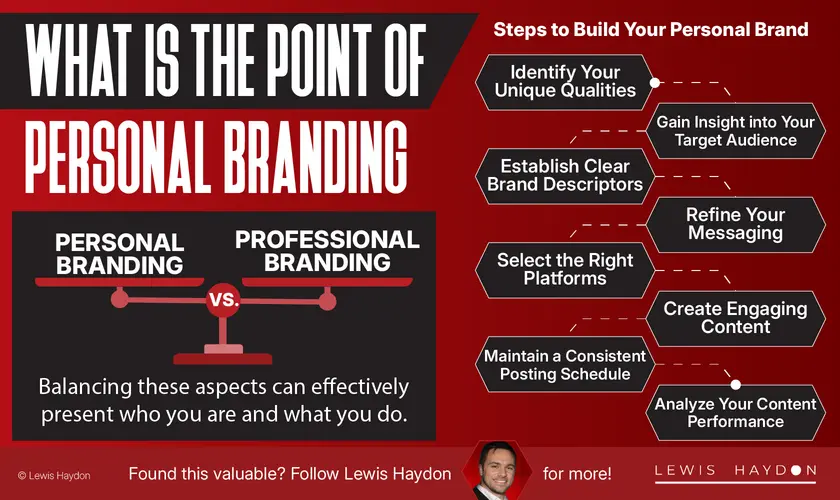
Personal vs. Professional Branding
Personal branding focuses on the individual, highlighting personal values, passions, and unique qualities. It is about the person behind the profession, their story, and what they stand for.
Professional branding, on the other hand, centers more on the work and expertise. It emphasizes achievements, skills, and professional development. Both play significant roles, but personal branding provides a more relatable and authentic connection. Balancing these aspects can effectively present who you are and what you do.

Steps to Build Your Personal Brand
Building a strong personal brand requires knowing what potential customers, clients, or audience members want and need. Although it can be challenging to start, the right tips can quickly set you on the right path. Here are eight tips to consider when creating and maintaining your personal brand.
Identify Your Unique Qualities
Building a strong personal brand starts with identifying your unique traits. Consider the skills, experiences, and qualities that make you different from others. What are your passions and core values?
Understanding your strengths helps create an authentic brand that connects with your audience. Everyone has a unique story. Your brand is the narrative you share with others. It’s your journey, experiences, and perspective.
Think about what you’ve achieved that sets you apart. Reflect on your skills and experiences. Consider the lessons you’ve learned and the obstacles you’ve overcome as they contribute to your personal growth.
Gain Insight into Your Target Audience
To create a brand that resonates with your audience, you need to understand them deeply. What are their needs, aspirations, and challenges? What motivates them? Clearly understanding your target audience helps tailor your messaging and content to connect more deeply.
Go beyond basic demographics and explore their interests, behavior patterns, motivations, and pain points. Map out their journey and find touchpoints where you can make an impact. This gives your brand direction and purpose. It also helps identify where your product or service may fall short, allowing you to improve your offerings.
Establish Clear Brand Descriptors
Brand descriptors are adjectives that define your personal brand. They are key to your brand identity and guide your messaging and content creation. Examples include innovation, trustworthiness, and authenticity.
Creating brand descriptors involves choosing words that are both attention-grabbing and relatable. The aim is to connect with your target audience. Consider your reasons for choosing them. The best brand descriptors are words you can own. They should be genuine, relevant, and reflect your unique brand traits. Before defining yours, examine what others in your field use. This helps you understand industry language and develop unique descriptors.
Refine Your Messaging
Understand your strengths and your audience’s needs to shape your messaging. Define your mission and vision. Identify the key messages for your audience. Clear communication can build a brand narrative that connects with them. Ensure your messaging matches your mission and vision. Be consistent across all platforms and channels. It should be clear, concise, and impactful, showing what you stand for and why your audience should care.
Select the Right Platforms
Many platforms can help build your personal brand, like social media, blogs, sales podcasts, and webcasts. Choose platforms that match your target audience and style. If your audience uses Instagram, it might be perfect for your brand. Different groups prefer different platforms. Facebook is popular with older people, while younger people like Instagram and Snapchat.
It can be hard to manage many social media accounts, so pick the ones most relevant to your audience. Research competitors to see their strategies and what content works for them. Think about the content you want to create. For video content, YouTube or Instagram could be suitable. If you like writing, try a blog or LinkedIn articles. Make sure your chosen platform is where your target audience spends their time.
Create Engaging Content
Creating captivating content is crucial for building a strong personal brand. Your content, whether videos, articles, podcasts, or webcasts, should be informative, entertaining, and engaging. It should also appeal to your target audience and match your brand narrative.
Consider the problems your audience faces and how your content can offer solutions. Each piece should add value and help your audience. More value means more trust from your audience toward you and your brand.
Use FAQs as a source of content ideas. You can turn them into helpful resources, like blog posts or video series. This approach gives you many potential topics to explore and helps establish you as a reliable source of honest information. Your audience will return and might even share your content with others.
Maintain a Consistent Posting Schedule
Consistency is crucial for your personal brand. Post content regularly, whether daily or weekly, to keep your audience engaged and build momentum. The best posting times vary by platform. Instagram typically gets more engagement during off-work hours, like nights and weekends. LinkedIn sees more interaction on weekdays. Know when your target audience is most active to maximize reach and engagement.
Analyze Your Content Performance
To evaluate your personal branding success, check your content’s performance. Consider metrics like engagement rates, click-throughs, and conversions. Tracking these can show what works and what needs improvement, helping you adjust your strategy.
A video with thousands of views isn’t always the best content. It’s helpful to see how long viewers watch, where attention drops, or if the video gets shared or saved.

10 Benefits of a Strong Personal Brand
Building a strong personal brand has many benefits for your professional and personal growth. Your personal brand shapes what others think and say about you when you’re not around. It’s basically your public reputation as a professional who can impact your career. Here are the ten main benefits of successful personal branding:
1. Creating Your Own Identity
A personal brand highlights what makes you unique in your field, such as your skills, experiences, accomplishments, or values. This differentiates you from others and makes you memorable to employers, clients, or partners. It improves your competitiveness in the job market and helps you command a higher salary. A strong personal brand clearly shows your unique value, making it easier for decision-makers to see why you’re the best fit for new projects and opportunities.
2. Building Credibility
Investing in your personal brand helps you earn audience trust. Share insightful content, engage in conversations, and show your skills to build a solid reputation. Greater credibility attracts more opportunities and invites others to seek your opinion, advice, and collaboration.
3. Gaining Confidence
Confidence is a powerful benefit of personal branding. It grows from knowing your strengths and how to present them. Confidence helps you take on new challenges and speak up with authority. It also encourages you to push boundaries and reach your full potential. Having a strong personal brand gives you the assurance and motivation to succeed in your goals.
4. Networking Opportunities
Networking and meeting new people are crucial for career or business growth. You never know who might become your next client, partner, mentor, or referral. A strong personal brand increases your visibility and accessibility. It helps leverage your existing network as your fans, followers, and customers spread the word about you and your work. A strong personal brand leads to more connections, collaborations, leads, and sales.
5. Increased Visibility
Personal branding raises your profile and sets you as an expert in your field. This visibility brings increased recognition beyond your immediate network and followers. Sharing insights and valuable content can capture the attention of industry influencers, media, and potential employers or clients. Increasing your exposure helps your personal brand open doors for new career opportunities.
6. Career Advancement
A strong personal brand can lead to new job opportunities, speaking gigs, and sales leads. According to a CareerBuilder study, 70% of employers use social media, such as LinkedIn, to screen candidates. With a strong personal brand, employers are more likely to reach out with job offers.
7. Connecting with Target Audience
Personal branding lets you communicate effectively with your audience by forming an emotional connection. It enables clear and consistent interaction, building trust and deeper connections. A loyal audience provides feedback and insights, helping you improve your content and tailor messages to their needs.
8. Showcasing Your Expertise
A strong personal brand allows you to demonstrate your skills and knowledge. Show your expertise through blogs, videos, or public speaking. Share valuable insights and solutions that can help others. An expert in a field often attracts attention and respect. Establishing yourself as a thought leader can lead to opportunities and collaborations.
9. Creating Lasting Impressions
A strong personal brand creates lasting impressions. People will associate you with specific qualities and values. This recognition can be beneficial in professional settings. It helps you stand out and remain memorable. A personal brand leaves a positive, lasting mark on others. It strengthens your reputation over time.
10. Fostering Trust and Loyalty
A strong brand can help you build a loyal and engaged network by fostering community and advocacy among your followers. It inspires your network to support, refer, and promote you while also providing valuable feedback and testimonials. For example, a fitness coach could create a Facebook group or a YouTube channel to offer valuable content, challenges, and support, using it as a platform to connect with clients.