Time management skills are essential for both work and personal life. Many employees struggle with distractions and staying motivated. Reports show that 43% of employees find it hard to stay motivated, and 29% struggle to focus. At the same time, 71% of leaders feel pressured to increase team productivity.
This post explains the importance of time management and shares practical time management tips.
What is Time Management?
Time management helps you use your time effectively. It involves planning how to split your time between tasks. With strong time management, you can handle everything you need without feeling overwhelmed. It allows you to focus on urgent and important tasks first while still addressing other important ones later. This approach helps you concentrate on what matters most and work more efficiently, increasing your productivity.
Advantages of Effective Time Management
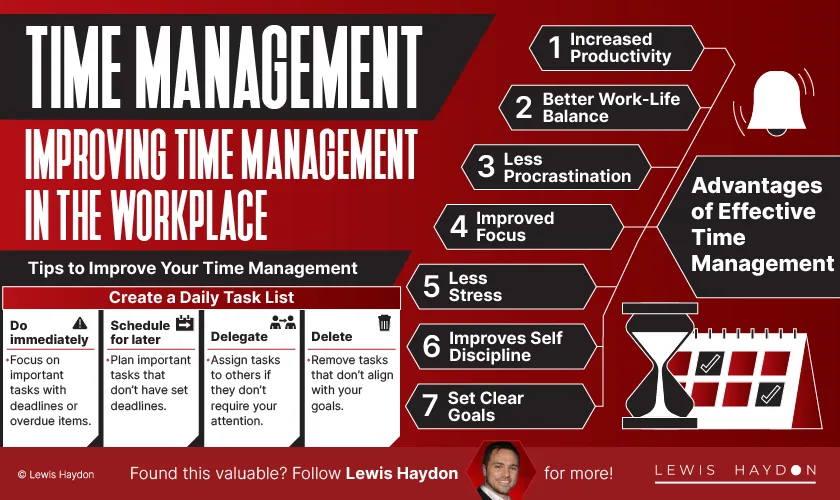
Here are some advantages of employing time management strategies and becoming an effective time planner:
Increased Productivity
Mastering time management helps you complete tasks faster and boost overall productivity. You might find yourself finishing work sooner and feeling less pressure from deadlines. Use a calendar, management software, or a to-do list to track deadlines and plan your tasks effectively.
Better Work-Life Balance
Balancing work and personal life can be challenging. Setting time management goals helps you stay focused and organized, making both work and personal time more enjoyable. Prioritize tasks and create clear boundaries to prevent work from spilling into personal time. This way, you can end your day feeling accomplished and still have time for yourself, your hobbies, and your loved ones.
Less Procrastination
Time management helps you avoid procrastination. Breaking your day into tasks with clear deadlines gives you a simple plan to follow. It eliminates the question of “Where do I start?” and keeps you on track. The payoff? Less time wasted and more tasks completed. Once you start checking things off your list, it’s easier to stay motivated and keep going.
Improved Focus
Managing your time well can help you stay focused at work. Assigning specific time slots to tasks stops you from taking on too much at once. It also helps you plan your day in a productive environment. For instance, you could respond to emails in a quiet room or handle focused tasks in a less busy part of the office.
Less Stress
Managing your time well can help lower stress. Breaking your day into smaller tasks lets you prepare for unexpected delays or problems. For instance, if a project might take longer than expected, plan extra time for it. This way, even if it runs over, you can still complete everything else without worry. Using tools and simple planning methods can make your tasks feel more manageable.
Improves Self Discipline
Practicing time management can help you build self-discipline by following a set plan. This trains you to complete tasks as planned. For instance, if you often rush through end-of-day tasks due to running out of time, sticking to a schedule can help you focus and complete your work more thoughtfully.
Set Clear Goals
Time management helps you organize your day and reduce time spent deciding what to do next. For example, if you’re working on a complex project with unclear steps, break it down into clear tasks before you begin. This turns the project into a straightforward checklist, giving you a clear plan. Setting objectives in advance saves time and lets you focus on getting the work done.
Disadvantages of Time Management
Managing time effectively often requires setting aside enough time to plan and create a strategy. After shifting focus to a different goal, there’s often a strong need to quickly get back on track to avoid disrupting future plans. Those around you may feel uneasy during this process because they are unsure how much time they have to complete their tasks.
Unclear Targets
Effective time management helps increase productivity and benefits individuals. Without it, people may set unclear and unachievable goals. Do you know someone who seems confused or unsure of what to do? Poor time management leads to disorganized tasks, which can negatively affect you.
Inactivity
Managing time becomes harder when there is a lot of uncertainty. Having control over your time makes life easier and less stressful. When tasks are less physically demanding, it can lead to less movement. Good time management allows you to focus on meaningful activities and visit interesting places. However, if you are too focused on perfection, things may stay the same.
Bad Management
Organized work reduces mistakes, and the need for revisions, but overthinking organization can cause errors. People are often blamed for poor management skills and increase workloads by overlooking details or instructions. Forgetful individuals could benefit from developing consistent habits. However, maintaining such consistency can feel exhausting.
Missing Deadlines
Missing deadlines causes stress and disrupts progress. It can harm productivity and damage relationships at work. Poor planning or lack of focus often leads to delays. Setting clear goals and managing time wisely can help avoid this issue. Proper communication is also important to manage expectations and stay on track.
Obstacles
Small annoyances, like arriving too early or overthinking decisions, can lead to problems over time. Poor time management can make things harder. It’s frustrating when others interrupt you with unimportant matters. Instead of worrying about the future, focus on what needs to be done before starting work. This helps reduce stress.
Difficulty Saying No
Learning to say no is important for managing time and reducing stress. Agreeing to too many tasks can lead to exhaustion and missed deadlines. Turning down requests politely lets you focus on priorities without feeling overwhelmed. It is not selfish to protect your time and energy. Saying no helps create balance and set clear boundaries.
Different Time Management Styles
Here are some of the best time management techniques explained:
The Eisenhower Matrix Style
The Eisenhower Matrix helps separate urgent tasks from less important ones. Tasks are divided into four groups: urgent and important (do now), important but not urgent (schedule for later), urgent but not important (delegate), and neither urgent nor important (eliminate).
For instance, meeting a client deadline is “urgent and important” because it requires immediate action. On the other hand, researching tools for your workflow is “important but not urgent” and can be planned for later. This method helps manage priorities, delegate effectively, and avoid wasting time on low-value tasks.
The ABC Prioritization Style
The ABC prioritization method helps categorize tasks based on their importance. Tasks labelled “A” are the most critical and must be completed first. “B” tasks are important but not as urgent as “A.” “C” tasks are the least important and can be addressed last. This system is simple and ensures you focus on high-priority work.
The Time-Blocking Style
Time-blocking means assigning specific time slots to tasks on your calendar. For example, from 9–9:30 AM, you focus on emails. From 9:30–10:30 AM, you work on a report. At 10:30 AM, you take a 30-minute break or handle a quick call. Each block is a commitment to work on a specific task without distractions. If your day feels chaotic with meetings, calls, and work, time-blocking helps you set aside focused time for projects without interruptions. It’s a simple and effective way to organize your day.
The Reactive Time Management Style
This approach works well for people who thrive on unpredictability or need flexibility, such as those in customer service or event coordination. Instead of planning every detail, it focuses on adapting to new tasks and issues as they arise. For example, a manager might have a basic plan but quickly adjust if an urgent issue comes up. While effective in fast-paced settings, this method requires strong prioritization skills and the ability to manage stress.

Tips to Improve Your Time Management in the Workplace
Here’s how to get started designing a better time management routine.
Implement Time Management Training
Time management training helps employees develop skills to handle tasks efficiently. It teaches techniques such as setting priorities, avoiding distractions, and creating schedules. Employees who receive this training often feel more organized and less overwhelmed. With better time management, productivity can increase, and workplace stress can decrease.
Take Breaks
Taking breaks is important for maintaining focus. Short pauses help refresh the mind and reduce fatigue. A quick walk, stretching, or even a few minutes of quiet can improve concentration. Regular breaks can lead to better performance and overall well-being.
Create a Daily Task List
To-do lists are great for staying productive, but they can become overwhelming if they get too long. The Eisenhower Matrix is a tool that helps prioritize tasks based on importance and urgency. Here’s how it works:
- Do immediately: Focus on important tasks with deadlines or overdue items.
- Schedule for later: Plan important tasks that don’t have set deadlines.
- Delegate: Assign tasks to others if they don’t require your attention.
- Delete: Remove tasks that don’t align with your goals.
Set Time Limits
Parkinson’s law says that work takes as much time as you give it. If you have a full day to finish two tasks that only need three hours, you’ll likely spend the whole day on them. Set a shorter deadline, and you’ll likely finish faster.
Avoid Multitasking
Multitasking reduces efficiency and can be risky. The American Psychological Association explains that switching between tasks creates “switching costs,” which lower productivity. Even small delays from switching add up over time, especially if you multitask often. It also increases the chance of making mistakes.
Improve Scheduling
Plan your day with time blocks for each task. Stick to the schedule to stay productive. Set realistic timelines. People often overestimate how much they can do, which leads to missed deadlines. Include time buffers between tasks to keep your schedule on track even if one runs over.
Focus completely on work. Avoid visiting non-work-related sites or distractions during work hours. Close extra browser tabs and keep your phone out of reach until breaks. Self-discipline is essential.
Time Management vs Task Management
Task management and time management are connected but different concepts. Task management involves identifying, prioritizing, and tracking tasks that need to be completed. Time management focuses on planning and scheduling how to use your time effectively.
Task management is about deciding what needs to be done, while time management determines when and how to do it. Both are essential for productivity, but they serve different purposes. Task management helps you prioritize tasks, while time management helps organize your schedule. Understanding these differences can help you work more efficiently and accomplish more.
FAQs
What are the 5 P's of time management?
The 5 P's of time management are Prioritize, Plan, Prepare, Perform, and Process. Prioritize tasks based on importance and deadlines. Plan your day by outlining tasks in an organized way. Prepare the resources needed to complete your work. Perform tasks with focus and efficiency. Process what you have accomplished to improve future workflows.
What is the 7 8 9 rule of time management?
This tool gives advice on how to manage your time effectively. It suggests getting 7u20138 hours of sleep each night to stay healthy and well-rested. Plan for 8u20139 hours of work to stay productive and meet your goals. Finally, make sure you have at least 7 hours of free time each day to relax, recharge, and enjoy activities you love.
What is the 3-3-3 method of time management?
The 3-3-3 Method helps employees stay focused and organized. It involves spending three hours on one main task, followed by three smaller tasks that each take about an hour. This approach minimizes distractions and creates a steady work routine. It supports better productivity and job satisfaction.nnu00a0