Starting a business is all about having the right idea and the motivation to work around it. However, when you start moving the wheels, you must put everything you planned on paper. This is simply called a business plan.
The business plan can be short and straight to the point, but it can also be a detailed roadmap explaining the stages of your project and where you’re planning to take your company in the future. It helps business owners set the vision and hire the right people to help them do it.
What is a Business Plan?
Simply put, it is a document that sets your business goals and strategies for the future. Through it, you highlight the most important parts of your idea to yourself, but also to those you’re about to present it to. It is crucial for attracting investors and experts to help you achieve your goals.
A properly written business plan will have everything about the business and the idea inside. It consists of information about the finances, marketing, and the operation itself. The plan outlines the management structure, the tools necessary to develop the planned product, and all other key elements essential for the business.

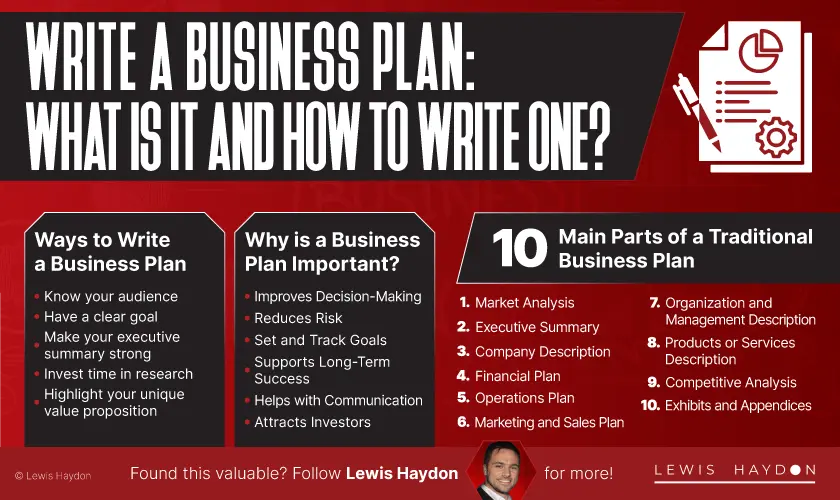
10 Main Parts of a Traditional Business Plan
There are many parts that make the business plan, but some are mandatory. A traditional plan will have an outline that focuses on several points: the market you’re building an idea for, the finances, the operations, and other things. Here’s how a business plan should look:
1. Market Analysis
This section of your business plan explains where your business sits in the market. It includes industry trends, target audience insights, and competitor research. A market analysis allows you to see opportunities and threats, making it easier to create a business plan that’s grounded in reality.
2. Executive Summary
The executive summary is the first part investors will read, yet it is often written last. It gives a snapshot of your business idea, your financial plan, and your business goals. A strong executive summary can be the difference between securing a business loan and being overlooked.
3. Company Description
Here, you describe your company’s mission, vision, and legal structure of your business. Whether you run a small business or a growing enterprise, this section helps others understand what makes your business unique.
4. Financial Plan
Your financial plan demonstrates how you will fund and sustain your operations. It should include profit forecasts, cash flow statements, and funding sources. Investors and lenders will look closely at this part of the business plan to decide whether your business idea is financially viable.
5. Operations Plan
An operations plan outlines how you will run your business day to day. It covers staffing, supply chains, and logistics. This section ensures you have a clear plan to turn your business concept into a functioning company.
6. Marketing and Sales Plan
Your marketing plan explains how you’ll reach customers and grow your business. It covers pricing strategies, promotional channels, and sales tactics. This section is essential for showing how you plan to attract and keep your customers.
7. Organization and Management Description
This part of the business plan introduces your team and management structure. Business partners, advisors, and staff roles are detailed here, giving potential investors confidence in the people behind the business idea.
8. Products or Services Description
Here you explain what you’re selling and why it’s valuable. Whether it’s a product or service, describe its features, benefits, and how it meets market demand. This section helps readers understand why your business idea stands out.
9. Competitive Analysis
Competitive analysis shows how your business compares with others in your industry. It identifies strengths, weaknesses, and gaps in the market. This part of your business plan is critical for showing how you plan to outperform rivals.
10. Exhibits and Appendices
Exhibits and appendices hold supporting documents such as charts, legal papers, or research. They strengthen your case without cluttering the main body of the plan.
6 Types of Business Plans
Business plans come in different forms depending on the stage and purpose of your business. From lean startup business plans to traditional business plans, the type of plan you choose should match your needs.
- Startup Business Plan – A startup business plan is designed for new business ventures. It focuses on funding, market entry, and building a customer base.
- Operational Business Plan – An operational business plan details how an existing business will run day to day. It focuses on internal processes and efficiency.
- Internal Business Plan – This type of plan is created for internal use. It helps management track progress, allocate resources, and make decisions.
- Strategic Business Plan – A strategic business plan looks at long-term goals and the strategies to achieve them. It often guides business development and expansion.
- Lean Business Plan – Lean startup business plans are shorter and less detailed. They provide an outline rather than a full report, saving time while still guiding action.
- One-Page Business Plan – A one-page plan is a concise version that captures the essentials. It is useful for small business ideas and quick pitches.
Why is a Business Plan Important?
A business plan is essential for success. It helps guide decisions, reduces risks, and attracts funding. Without a business plan in place, it’s difficult to measure progress or communicate your vision.
- Improves Decision-Making – A written business plan provides clarity, helping business owners make informed choices.
- Reduces Risk – By identifying potential challenges early, a business plan can help your business avoid costly mistakes.
- Set and Track Goals – A business plan helps you start your business with clear goals and track achievements along the way.
- Supports Long-Term Success – A plan guides your growth, making it easier to run your business sustainably over time.
- Helps with Communication – A business plan communicates your vision to business partners, staff, and investors.
- Attracts Investors – A good business plan gives potential investors confidence that your business is worth supporting.
Ways to Write a Business Plan
There are multiple ways to write a business plan. It all depends on what you will focus on. Some people will focus on their audience, others on the goal they have in mind. Think about the most valuable or important thing that is wrapped around your idea, and form the plan based on it. Here are a few ideas:
- Know your audience – Write a plan that will focus on your audience. If you know who’s going to read it, you can easily create it to be suitable for their needs. This makes convincing others to join more probable.
- Have a clear goal – Every plan should highlight its purpose, whether it’s to raise funds, secure a business loan, or guide daily operations.
- Make your executive summary strong – This section of your business plan must capture attention and summarise your business idea clearly.
- Invest time in research – A well-crafted business plan is tested against thorough research, from customer needs to competitor strategies.
- Highlight your unique value proposition – Make clear what sets your business apart. This is what convinces readers that your business idea has real potential.
Don’t Know Where to Start with Your Business Plan? Lewis Haydon Can Help
Every startup and every business idea is unique. When you’re thinking about setting a business plan, you must find a bespoke approach to it. Although you can find free business plan outlines online, it’s best to write everything yourself from scratch.
If you have trouble doing it, or you don’t know where to start, you can always ask top business coach and business investor Lewis Haydon for help. This is a professional company specialised in helping clients handle the very first task of their new businesses, and that’s setting up the right plan that will drive the idea forward to success.
FAQs
Who needs a business plan?
Any business, from a small business to an established successful business, needs a business plan. It provides direction and helps attract funding.
How long does the business planning process take?
The time it takes to write a business plan depends on the complexity of your business. A one-page plan may take days, while a comprehensive plan could take weeks.
Why Do Business Plans Fail?
Business plans fail when they are unrealistic, lack research, or are not used as a tool to guide action. A business plan must be purposefully addressed in business plans and updated regularly.
What if I already have a business plan?
Lewis can review, refine, and enhance your current plan—ensuring it aligns with current market conditions, investor expectations, and your business evolution.