“Thought leadership” might sound like a buzzword, but when done right, it can help your brand stand out and build trust with your audience.
This article breaks down what thought leadership really is, why it matters in today’s business world, and how you can start building your reputation as a trusted expert.
What is Thought Leadership?
Thought leadership is about offering clear, meaningful insights within a specific field. It’s about understanding what’s driving industry changes and confidently predicting what’s next.
A successful thought leader provides valuable perspectives on where the industry is and where it is headed. This isn’t just about sharing opinions—it takes expertise, clarity, and forward thinking. Done right, thought leadership builds trust, connects with your audience, and raises visibility, especially when your insights help others improve sales skills and navigate emerging opportunities.
What is a Thought Leadership Strategy?
A thought leadership strategy helps you stand out by sharing your expertise and valuable insights. It’s a smart way to build authority, attract clients, grow your business, and increase sales.
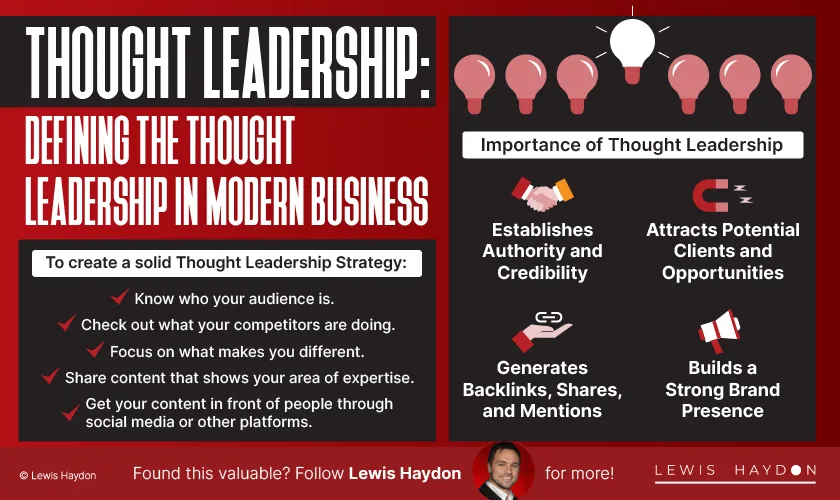
To create a solid strategy:
- Know who your audience is.
- Check out what your competitors are doing.
- Focus on what makes you different.
- Share content that shows your area of expertise.
- Get your content in front of people through social media or other platforms.
The Three Main Types of Thought Leadership
Industry-centric
Industry thought leadership lets you show your expertise and become a trusted voice and establish yourself as a trusted authority in your field. This includes sharing insights on trends, challenges, and new ideas that matter to your audience.
Product-based
Product thought leadership content helps guide customers with practical tips, clear how-tos, and smart solutions related to your products and services. It teaches your audience how to get the most out of what you offer, building trust and encouraging long-term connections.
Organizational
Organizational content helps share your company’s values, vision, and mission in a way that connects with your audience. It shows what makes your organization unique, builds trust, and strengthens relationships with the people who matter most.

Importance of Thought Leadership
Establishes Authority and Credibility
Trust isn’t automatic—it’s built over time. Sharing thoughtful, insightful content shows your expertise and dependability. As you consistently show up and share your knowledge, your audience starts to see your values and commitment, making you a go-to person in your field.
Attracts Potential Clients and Opportunities
Successful thought leadership is a smart way to attract new business. Research shows that decision-makers spend much time reading thought leadership content, opening doors for connection and collaboration. Share valuable insights, and your organization can become the trusted resource professionals turn to in your industry.
Generates Backlinks, Shares, and Mentions
The best thought leaders don’t just attract readers—they get people talking. Engaging articles inspire others to share, link, and mention your work, helping spread your message and grow your brand’s reach.
Builds a Strong Brand Presence
Consistent, meaningful thought leadership helps your audience know what to expect and trust your voice. This connection strengthens your brand and shows what your organization stands for and the values driving your team.
Steps to Defining Thought Leadership in Modern Business
1. Address Your Audience’s Pain Points
Your audience wants to feel heard and understood, especially when facing challenges. They might look elsewhere for answers if you don’t address their needs. In fact, 71% of decision-makers say much of the thought leadership they come across isn’t helpful or insightful.
Want to stand out? Focus on creating content that answers their biggest questions and offers useful solutions.
2. Produce Content Consistently
Becoming a thought leader means creating content regularly to stay ahead of the competition. You risk losing your audience’s trust if you go quiet for too long. Think of yourself as a reliable source of information—people need regular updates to stay interested.
A good content calendar can keep you on track and help you show your expertise while staying dependable in your industry.
3. Distribute and Promote Your Content
Ready to get your message out there and grow your audience? Here’s how to build your thought leadership with impact.
- Use Different Formats and Platforms
Thought leadership isn’t limited to one platform or style. The goal is to connect with your audience where they already spend time. Start with some platforms like LinkedIn, X (formerly Twitter), or your blog. Focus on sharing high-quality content consistently before branching out further.
Got a post that’s performing well? Turn it into a video, break it into bite-sized Reels or Shorts, or adapt it for LinkedIn or TikTok. Repurposing content saves time and helps you share your message with more people.
- Engage and Collaborate with Your Network
Growing your influence means staying active in your network. Comment on and share posts from others, and reply to comments on your own content. These conversations help you connect with more people and build meaningful relationships.
Team up with other experts to create content or share each other’s work. When speaking at events or webinars, mention your content to get it in front of new audiences.
How to Identify a Thought Leader?
Spotting a thought leader means looking for the traits and actions that make them stand out. True thought leaders are trusted and respected by their peers, with a strong reputation and real success. They’re passionate about sharing knowledge and helping others grow.
Key traits of a thought leader:
- Deep knowledge in their field
- Clear and engaging communication
- A proven track record
- A genuine desire to help others
- Earned trust and respect from their peers
What is the Difference Between Content Marketing and Thought Leadership?
While both approaches focus on building connections, their goals are different.
Content marketing is all about engaging your audience and turning them into leads. Content marketers use every step of the customer journey to place content where it matters most strategically.
Thought leadership, on the other hand, is about creating a stronger connection by sharing expertise and fresh ideas. This helps position your brand as more than just a provider—it makes you a trusted voice in your industry.
Also, content marketing covers everything a company uses to promote itself—blog posts, social media, newsletters, product tutorials—you name it. The goal is to answer customer questions, solve problems, and guide them through the marketing funnel with consistent, targeted content.
Thought leadership is more focused. It’s not just about answering questions; it’s about sharing unique, bold insights that help your brand stand out as an authority.
FAQs
What are the pillars of thought leadership?
Setting a Clear Vision - Defining goals to keep everyone focused and motivated.nCommunicating with Impact - Sharing ideas clearly to connect and engage.nBuilding Strong Relationships - Creating trust and teamwork with people who matter.nMaking Smart Decisions - Solving challenges with practical, creative solutions.nStaying Flexible and Learning - Adapting and growing in a changing world.
Why is it called thought leadership?
Thought leadership is about leading with ideas and insights, not just authority. A thought leader makes an impact by offering fresh perspectives, encouraging new ways of thinking, and often shaping whatu2019s next in their industry. Itu2019s about sharing knowledge and inspiring others through expertise and forward-thinking strategies.
Is thought leadership a skill?
Yes, thought leadership is a skill. It combines expertise, clear communication, creativity, and strategic thinking. It grows through hands-on experience, ongoing learning, and a strong grasp of a specific field. Thought leaders are skilled at spotting trends, sharing useful insights, and shaping how others think or act. While knowledge is the foundation, the ability to inspire, connect, and share fresh ideas is a skill anyone can practice and improve.