Community management isn’t just about handling social media—it’s about building real relationships. Sure, it sounds simple, but how often do brands actually pause to engage, not just broadcast? It’s messy, sometimes imperfect, but vital. Think of it like hosting a party: you can’t just set the mood and leave—you need to mingle, listen, and keep the conversation alive.
What is Community Management?
Community management isn’t perfect—it’s a mix of strategy and trial and error. It shapes how your audience—customers, employees, partners—comes together. Is your online community a support hub, sharing quick tips? Or is it a space for product feedback and ideas? Some balance both. Engagement or advocacy, what’s your goal? The right approach (and manager) should fit your business needs, like finding the right tone in a conversation. It’s all about connection.
Types of Community Management
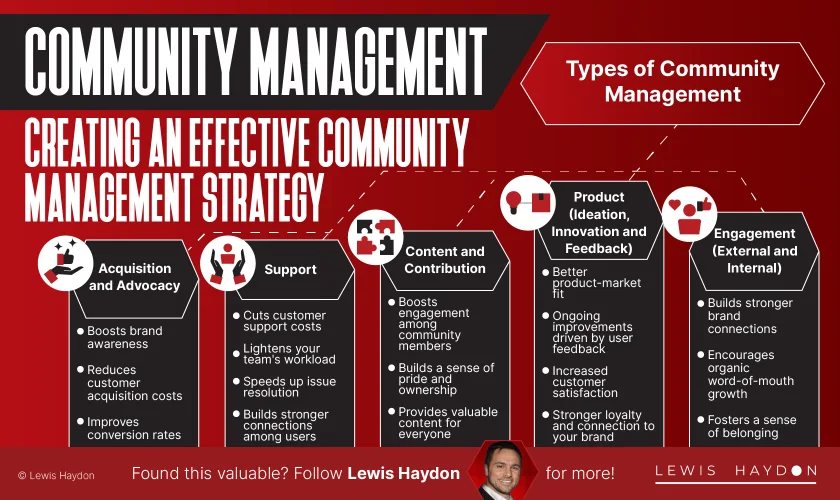
Community management isn’t one-size-fits-all. It shifts based on audience needs and organisational goals. What works? It depends. Different approaches help build engagement—like choosing the right tool for the job.
Acquisition and Advocacy
Acquisition and advocacy communities are networks of ambassadors and advocates who spread the word about your brand. They share your products and services through word of mouth, affiliate links, and social media channels.
Benefits:
- Boosts brand awareness
- Reduces customer acquisition costs
- Improves conversion rates
Best for: While almost any company can benefit, these communities are especially impactful for startups and emerging brands looking to establish their presence.
Support
Support communities bring people together to share solutions and advice. Often hosted as online forums or discussion boards, they let users ask and answer questions directly. Pair these with resources like knowledge bases or FAQs to simplify self-service.
Benefits:
- Cuts customer support costs
- Lightens your team’s workload
- Speeds up issue resolution
- Builds stronger connections among users
Best for: Brands with complex products, like software or electronics, where users can exchange insights and troubleshooting tips.
Content and Contribution
Content and contribution communities inspire users to share ideas, create content, or collaborate on projects. Contributions might include guest blogs, media uploads, or work on open-source software hosted on your site. Teams often review user-generated content to ensure it aligns with guidelines, maintains quality, and stays relevant.
Benefits:
- Boosts engagement among community members
- Builds a sense of pride and ownership
- Provides valuable content for everyone
Best for: Media companies, creative industries, and open-source initiatives relying on UGC.
Product (Ideation, Innovation and Feedback)
Product communities create a space where customers feel encouraged to share feedback on your products and services. They can offer ideas for improvement or spark innovation. Essentially, it’s an invitation for users to actively shape your product’s growth.
Benefits:
Better product-market fit
- Ongoing improvements driven by user feedback
- Increased customer satisfaction
- Stronger loyalty and connection to your brand
Best for: Consumer-focused SaaS companies that rely on user feedback for iterative development.
Engagement (External and Internal)
There are two main types of engagement communities: internal and external.
Internal communities bring together a brand’s team members, including employees, partners, and suppliers. They act as a central hub for sharing updates, resources, and aligning teams. These communities boost collaboration, morale, retention, and help reinforce company goals and values. External communities, on the other hand, connect people with shared interests tied to a brand.
Benefits:
- Builds stronger brand connections
- Encourages organic word-of-mouth growth
- Fosters a sense of belonging
Best for:
Internal: Ideal for large organisations with distributed teams.
External: Suits lifestyle-focused brands like fitness or beauty companies with distinct identities.
Benefits of Community Management
Community management is an important way to build meaningful relationships between a brand and its audience. It helps create trust, loyalty, and community engagement by fostering real connections.
Boost Engagement
Engagement doesn’t appear out of thin air—it’s built piece by piece. Think of it like starting a conversation. Sometimes a post gets shares and comments, other times it’s crickets. That’s fine. Experiment, tweak, and try again. Every small win, like a like or a reply, brings you closer to your audience.
Drive Website Traffic
Traffic isn’t just a numbers game—it’s about attracting people who actually care. Imagine hosting a party; you want guests who stick around, not just pop in and leave. Not every campaign will be a hit, but every effort teaches you. Keep your site valuable. Make it a place worth revisiting.
Increase ROI
ROI improvement is a process, not a quick fix. It’s like adjusting a recipe—sometimes you add too much, sometimes too little. Each campaign is a chance to find that sweet spot. Invest smartly, learn from mistakes, and fine-tune as you go. Over time, those small tweaks lead to big results.
Connecting with Your Audience
Connection happens where it matters, not everywhere all at once. Think of it like catching up with a friend—you don’t need to shout, just speak their language. Some posts may flop, and that’s okay. When your tone is real and relatable, you build trust. Slowly, but meaningfully.
Increase Brand Awareness
Building brand awareness is like planting seeds; it takes patience and care. People may not remember you overnight, and the path won’t always be straightforward. That’s normal. Keep showing up, keep being consistent. Every interaction—no matter how small—cements your brand in their minds over time.

6 Ways to Create an Effective Community Management Strategy
A solid community management strategy isn’t about perfection. It’s about creating a space where people feel connected—to your brand and each other. Sure, it can build loyalty and protect your reputation, but it’s also messy. People are unpredictable. So, how do you make it work? Here are some tips and best practices to help you create an effective strategy:
1. Understand Your Audience
If you don’t know who you’re talking to, it’s like shouting into the void. Who are your people? What do they care about? Start with the basics—age, gender, interests. Google Analytics can help. Build personas. If your audience loves Facebook groups or Reddit threads, meet them there. It’s not about perfection, just finding where they already hang out.
2. Define Success Metrics
What does “success” even mean here? Is it more followers? Higher engagement? Sure, metrics matter, but don’t let them take over. Focus on real connections. Are people asking questions? Sharing ideas? Feeling like they belong? Track the numbers, but watch the vibe. Happy, connected people are always the better win.
3. Define Your Community
Is your community for sharing tips, swapping stories, or just connecting? Define its purpose. Be clear about who it’s for and why it exists. People can tell when something feels fake or forced. Make it welcoming, not intimidating. Think of it like hosting a dinner party—set the tone, and people will feel at home.
4. Encourage Feedback
Want your community to grow? Ask for feedback. Not just once—make it part of the process. Polls, comments, casual posts—whatever works. And here’s the catch: you actually have to listen. Show them their input matters. It’s like asking a friend for advice—if you don’t follow it, they’ll stop giving it.
5. Hire a Community Manager
A good community manager is like the glue holding everything together. They engage, moderate, and keep things moving. At first, maybe you handle the role of community management yourself. But as things scale, you’ll need help. Investing in community management services is worth it. A strong, active community doesn’t just happen—it needs a community manager’s expertise to steer the ship.
6. Increase Brand Awareness
Communities aren’t just about the people already there—they’re also a magnet for new ones. When your group is active and genuine, it attracts attention. Use it to showcase your values, solve problems, and build trust. Over time, your community becomes more than a space. It’s a reflection of your brand itself.
What Is the Difference Between Community Management and Social Media Management?
Understanding the distinction between community management and social media marketing is key, as each serves different purposes.
- Social media marketing focuses on creating and sharing content to attract new customers and engage existing ones. It prioritises metrics like reach, engagement, and driving traffic to your site.
- Community management comes next. It blends customer service, online listening, and participating in conversations about your brand.
Social media marketing spreads messages broadly, while community management begins on a smaller scale. Over time, it strengthens your brand’s presence, both on your platforms and beyond.
Learn to Manage Your Community the Right Way
Managing your community effectively requires patience, consistency, and a willingness to adapt. Are you fostering real connections or just responding to comments? It’s not always a straight path—some days will feel seamless, others more challenging. But that’s the beauty of growth. By listening actively, engaging genuinely, and staying true to your brand values, you cultivate trust. Over time, your community becomes a reflection of your efforts, a vibrant space that strengthens your company’s identity.
FAQs
Is community management a skill?
Absolutely. Itu2019s a mix of communication, empathy, and quick thinking. But itu2019s not perfectu2014far from it. Some interactions flow naturally, while others make you pause and rethink. Each exchange, smooth or messy, shapes relationships. Over time, these moments help you foster a community that truly reflects your companyu2019s identity.
What is an example of community management?
Think about responding to a frustrated customer comment. Maybe you donu2019t have the perfect answer right away, but your effort to listen, empathise, and respond thoughtfully matters. Or imagine steering an online discussion toward your companyu2019s values. These small, imperfect acts build trust and show that thereu2019s a human behind the brand.
How does community management work?
Itu2019s a constant back-and-forth. Some days, itu2019s smooth sailingu2014a quick reply here, a shared resource there. Other times, itu2019s messy, requiring patience or second chances. Community management is about showing up, learning as you go, and aligning interactions with your companyu2019s values. With time, these small moments create something bigger.